
You set the timer for 15 minutes, determined to whip your home into a state of basic order. Yet, when the buzzer sounds, you’re often left standing in a half-cleaned kitchen, having gotten distracted by a cluttered drawer or spent the entire time chasing dust bunnies with little visible progress to show for it. This frustrating cycle is a classic sign of common 15 minute daily cleaning routine mistakes that sabotage your efforts. The promise of a quick daily cleaning reset is real, but it requires a specific strategy—a focused protocol, not a free-for-all. This guide cuts through the noise to show you what genuinely works and what quietly wastes your precious minutes, transforming your brief daily session from a source of stress into a reliable tool for maintaining calm.
A successful 15-minute daily cleaning reset is a focused maintenance protocol, not a deep clean. It works by targeting high-impact zones with specific, time-boxed tasks and fails when you get distracted by clutter or try to tackle large projects. The core principle is to execute a short, repeatable playbook that maintains visual order and basic hygiene, preventing mess from accumulating. Stick to the protocol, and you’ll create lasting calm; deviate into distraction, and you’ll just be moving the same mess around.
The Core Protocol: What a 15-Minute Reset Is (and Isn’t)
To make your daily cleaning reset work, you must first adopt the right mindset. This isn’t a deep clean or a weekly scrub-down. It’s a focused, time-boxed maintenance protocol designed to create visual calm and basic hygiene, preventing the chaos from building up. Think of it as hitting the “refresh” button on your home’s most lived-in spaces.

Photo by Look Studio on Unsplash
The success of this short cleaning routine hinges on three non-negotiable principles:
1. It’s Time-Boxed, Not Open-Ended
You have 15 minutes. The timer starts, the timer stops. This constraint forces efficiency and prevents the common pitfall of a “quick tidy” spiraling into an hour-long project.
2. It’s Zone-Focused, Not Whole-House
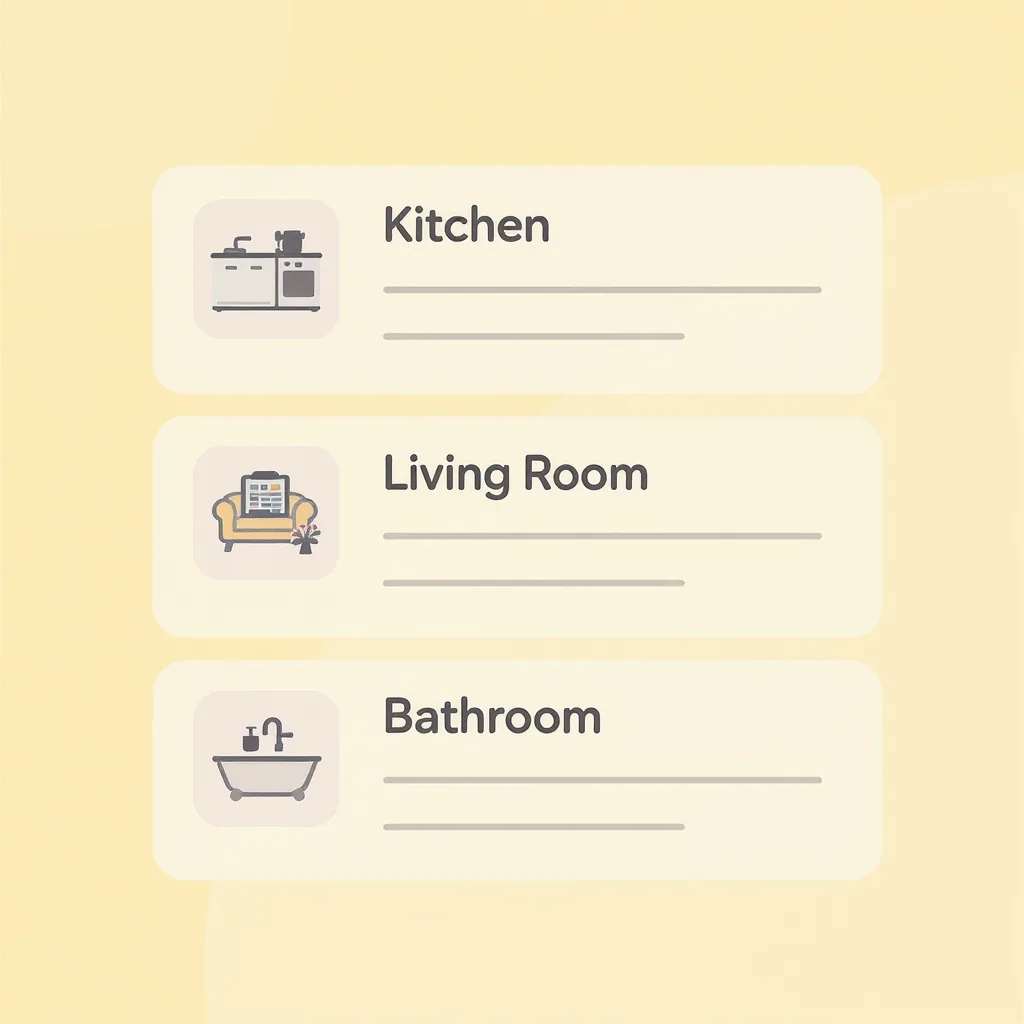
You cannot reset an entire home in 15 minutes. You target one to three high-impact zones—typically the kitchen, main living area, and a bathroom. These are the spaces that, when tidy, make your home feel managed.
3. It’s Task-Specific, Not “Whatever Catches Your Eye”
You don’t wander and react. You execute a pre-defined list of surface-level tasks: clearing, wiping, sweeping, and putting away. This is the opposite of getting sidetracked by organizing a drawer or cleaning inside the oven. Understanding this distinction is the key to avoiding daily maintenance cleaning pitfalls.
What Works: The High-Impact 15-Minute Playbook
Here’s where we translate the protocol into action. These quick cleaning routine tips are designed for maximum visible impact. Allocate your minutes based on which zones need the most attention that day.
Kitchen (5-7 Minutes)
This zone often offers the biggest visual return. Your mission: clear surfaces and ensure functionality for the next meal.
- Clear all dishes from counters and sink into the dishwasher (or wash/rinse if you hand-wash).
- Wipe down countertops, stovetop, and the kitchen table.
- Quick sweep of the floor around the high-traffic areas (under the table, by the sink).
- Put away any obvious clutter (mail, a stray coffee mug).
Living Room / Main Area (5-6 Minutes)
The goal here is to restore order, not to vacuum under the sofa.
- Fluff cushions and fold throw blankets.
- Clear coffee and side tables of cups, plates, and clutter.
- Do a “lap” around the room, returning items to their proper rooms (toys, books, shoes).
- Quickly run a duster over visible surfaces if needed.
Bathroom (3-4 Minutes)
A speedy surface wipe-down makes a world of difference.
- Wipe the vanity counter and sink with a disinfecting wipe or cloth.
- Quickly swish the toilet bowl with a brush and wipe the seat/outside.
- Hang towels neatly and toss any on the floor into the hamper.
- Spray the mirror and give it a fast wipe.
Your top three tasks for a fast cleaning habits win? Clear surfaces, deal with dishes, and do a clutter lap. Master those, and you’re 80% of the way there.
What Doesn’t Work: The 5 Most Common Time-Wasters
Now, let’s diagnose the failures. These are the 15 minute daily cleaning routine mistakes that turn a productive reset into a frustrating exercise. Avoid these, and you protect your precious time.
1. Starting Without a Plan (The “Wander & React” Method)
Why it fails: You walk into a room, see a mess, start cleaning it, then see another mess, and suddenly your 15 minutes are gone with little to show for it. You’ve been reactive, not strategic.
The fix: Before the timer starts, mentally (or physically) note your 2-3 target zones and the specific tasks for each.
2. Getting Sidetracked by Organizing or Deep Cleaning
Why it fails: You go to put a pen away and decide to reorganize the entire junk drawer. This is a project, not a reset task. It consumes all your time on one hidden area while the visible chaos remains.
The fix: If it requires more than 60 seconds of decision-making, it’s not for the reset. Note it for a weekend project and move on.
3. Letting Perfectionism Take Over
Why it fails: Spending 5 minutes scrubbing one stove burner or meticulously aligning every book on the shelf violates the “time-boxed” principle. The reset is about “good enough” to feel calm, not spotless.
The fix: Ask yourself: “Does this look and feel 80% better?” If yes, stop and move to the next task.
4. Ignoring Your Timer
Why it fails: The timer is your accountability partner. Silencing it because you’re “almost done” with one more thing erodes the discipline of the protocol and leads to burnout.
The fix: When the timer beeps, stop. Seriously. Even if you’re mid-task. This trains your brain to work efficiently within the boundary.
5. Cleaning Empty-Handed
Why it fails: Walking from the living room to the kitchen without taking that empty glass or stray toy is a missed efficiency opportunity. It creates extra trips.
The fix: Always have a “take with you” basket or simply make it a rule to never leave a room empty-handed during your reset. Return items to their homes as you move between zones.
Your Daily Reset Checklist & Pro Tips
To lock in the habit, use this consolidated checklist. Print it, save it on your phone, or mentally run through it each day.
The 15-Minute Daily Reset Checklist
- ☐ Set a 15-minute timer. This is non-negotiable.
- ☐ Kitchen (5-7 min): Dishes to dishwasher, wipe counters & table, quick sweep.
- ☐ Living Area (5-6 min): Fluff cushions, clear tables, clutter lap, surface dust.
- ☐ Bathroom (3-4 min): Wipe vanity & sink, swish toilet, hang towels, mirror.
- ☐ Stop when the timer beeps. Acknowledge your progress.
Pro Tips for Habit Success
- Stack the Habit: Tie your reset to an existing daily cue, like right after breakfast or immediately when you get home from work.
- Tool Efficiency: Keep a small caddy or pouch with multi-surface wipes, a microfiber cloth, and a duster in a central closet for grab-and-go speed.
- Mindset Hack: Crank up a 15-minute upbeat playlist. When the music stops, you stop. It makes the brief cleaning session feel more energetic and less like a chore.
Ready, Set, Reset
The power of this daily 15-minute cleaning reset isn’t in doing more; it’s in focusing better. By shifting from a scattered, reactive approach to a disciplined protocol, you trade chaos for consistent calm. You now have a clear playbook of what works—targeted, timed tasks in key zones—and a diagnosis for what doesn’t—the distractions and perfectionism that steal your time.
The system is simple. Your home doesn’t need a heroic effort every day; it needs a consistent, focused touch. So, the next step is decisive: tomorrow, set a timer for 15 minutes, start with your kitchen checklist, and execute your protocol. You’ll be amazed at what a focused quarter-hour can achieve.