You wipe down the mirror, scrub the sink, and give the toilet a once-over, yet your bathroom never feels truly clean. That lingering film on the glass, the water spots on the faucet, and the faint odor from the drain are telltale signs that common bathroom cleaning errors are undermining your hard work. The frustration is real: you’re putting in the effort but missing the mark on hygiene and potentially damaging your fixtures. This guide tackles the specific, often overlooked bathroom mirror and sink cleaning mistakes—along with critical toilet cleaning mistakes—that leave surfaces less sanitary and shorten their lifespan. We’ll move past the guesswork and outline the simple corrections that transform your routine from a superficial wipe-down into a protocol for a genuinely spotless and healthy space.
Here’s how to avoid common bathroom cleaning mistakes: For mirrors, skip glass cleaner on the frame and never use abrasive pads. For sinks, avoid pouring bleach directly into the drain and scrubbing porcelain with harsh powders. For toilets, don’t mix cleaning chemicals and always lift the seat to clean the hidden hinge area. Tackle each surface with the right tools and sequence for a truly spotless bathroom.
The High-Stakes Bathroom Cleaning Mindset
Cleaning the bathroom isn’t like tidying the living room. It’s a high-stakes hygiene operation where moisture breeds germs, and a vast array of sensitive materials—glass, chrome, porcelain, acrylic—can be easily damaged. The goal isn’t just a surface shine; it’s genuine sanitation and the preservation of your fixtures. To achieve this, you need to shift from a haphazard wipe-down to a deliberate protocol built on three pillars: the correct product, the correct tool, and the correct order.
One of the most common bathroom hygiene oversights is cross-contamination. Using the same cloth or sponge on the mirror, then the sink, and finally the toilet simply spreads bacteria around instead of removing it. Your mindset should be one of containment and progression, moving from the cleanest, driest surfaces (the mirror) to the wettest and germiest (the toilet and floor). By understanding this fundamental shift, you can avoid the most frequent cleaning errors on bathroom surfaces that leave you with a bathroom that looks clean but isn’t.
Mirror Cleaning Mistakes: Beyond the Streaks
Streaks are the obvious sign of a mirror cleaning blunder, but they’re often just a symptom of deeper errors. Correcting these mistakes is key to achieving a flawless, streak-free reflection.
Using the Wrong Cloth
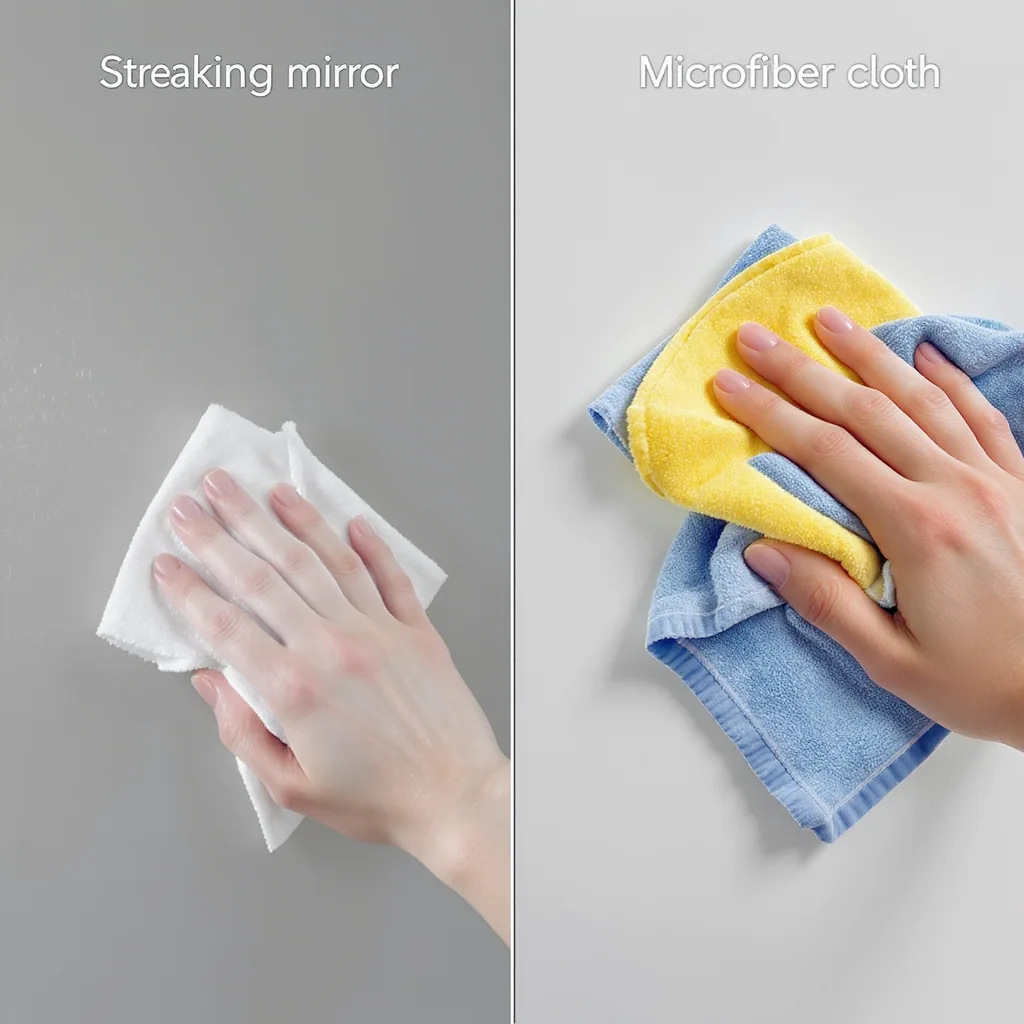
Paper towels and old t-shirts are prime culprits. Paper towels are made of wood pulp, which can leave behind tiny lint particles that create micro-streaks. Fabric softener residue on laundry rags can also smear and leave a filmy haze. The solution is a clean, lint-free microfiber cloth, which traps dust and moisture without shedding.
Spraying Cleaner Directly on the Glass
It seems efficient, but spraying glass cleaner directly onto the mirror almost guarantees overspray will hit the frame. If your frame is wood, painted, or has a special finish, the chemicals in the cleaner (especially ammonia) can discolor, degrade, or strip it over time. Always spray your cleaner onto the cloth first.
Cleaning in a Circular or Haphazard Pattern
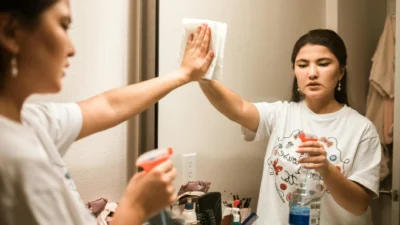
Random swirling motions make it impossible to track where you’ve cleaned, leading to missed spots and overlapping streaks that dry unevenly. For a uniform finish, clean in a consistent “S” pattern from top to bottom, finishing with a dry pass with a second clean microfiber cloth to buff away any remaining moisture.
Sink & Faucet Faux Pas You’re Probably Making
Consider this typical scenario: you see a stubborn water spot or toothpaste stain in the sink. You grab a harsh abrasive powder and scrub vigorously. The stain might fade, but you’ve now created a network of tiny scratches in the porcelain or acrylic. These micro-scratches become magnets for future grime and stains, making the sink harder to clean next time. This is a classic example of sink cleaning pitfalls causing long-term damage.
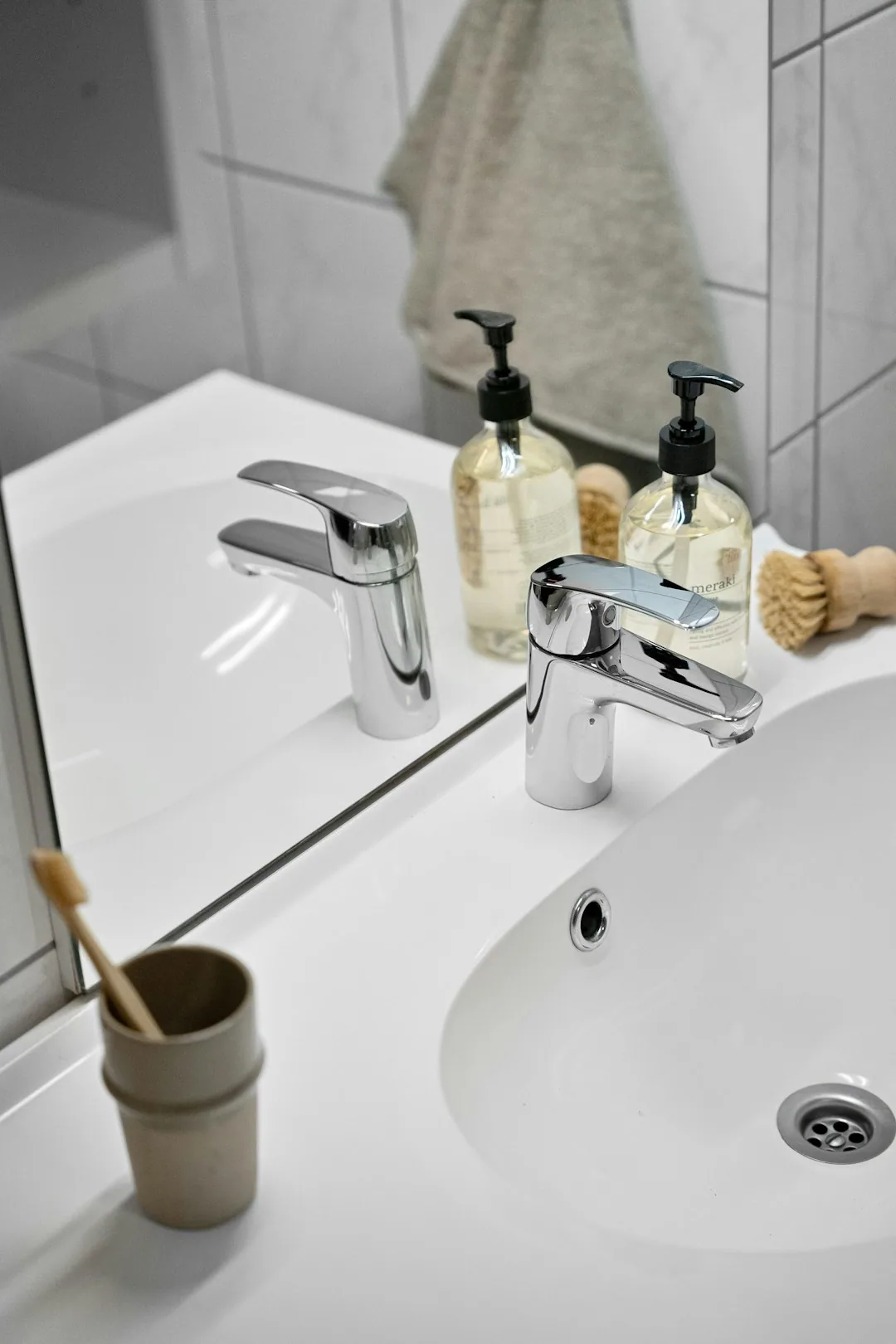
Photo by Alex Tyson on Unsplash
Basin and Surface Errors
Beyond abrasive scrubs, a major bathroom sink cleaning error is ignoring key areas. The overflow hole (the small opening near the top of the basin) is a haven for mold and grime. A pipe cleaner or small brush dipped in a mild disinfectant should be run through it monthly. Also, remember to remove and clean the pop-up drain stopper, where hair and soap scum accumulate.
Faucet and Fixture Mistakes
Using an all-purpose cleaner or vinegar-based solution on a chrome, brushed nickel, or gold faucet can dull the finish. For most modern faucets, warm water, a drop of dish soap, and a soft cloth are sufficient. Always dry the faucet thoroughly after cleaning to prevent new water spots, a simple step that is often overlooked.
Drain Missteps
Pouring straight bleach or commercial drain cleaner down the drain as a routine maintenance practice is a serious error. These caustic chemicals can damage PVC pipes and seals over time and they kill the beneficial bacteria in septic systems. For routine care, use a baking soda and vinegar flush followed by hot water, or use a enzymatic drain cleaner. Save the harsh chemicals for actual clogs, and use them sparingly.
Toilet Cleaning Errors That Compromise Hygiene
When it comes to toilet cleaning mistakes, the stakes are highest for your household’s health. Many common practices inadvertently spread germs rather than eliminate them. Adhering to a strict hygiene protocol is non-negotiable.
Not Lifting the Seat (Fully)
Simply wiping the top and inside of the bowl misses critical germ hotspots. You must lift the seat to access the hinge area on the underside of the seat and the porcelain rim it rests on. This zone is constantly exposed to microscopic aerosols from flushing. Use a disinfectant wipe or cloth with bathroom cleaner to thoroughly scrub these hidden surfaces.
Using One Brush for Everything
Your toilet brush should live in its holder and be used only for the inside of the toilet bowl. Using it to scrub the exterior tank, base, or seat is a major cross-contamination misstep. For those exterior parts, use disposable disinfecting wipes or a dedicated cloth that you launder immediately after.
Mixing Cleaning Chemicals
This is a dangerous error. Never, under any circumstances, mix bleach with other cleaners, especially those containing ammonia (like many glass cleaners) or acids (like some bowl cleaners). The chemical reaction can produce toxic gases. Always use one product at a time, flush the toilet in between applications, and ensure the room is well-ventilated.
Neglecting the Base and Behind the Toilet
The floor around the toilet base and the space behind the tank collect dust, hair, and splashes. Skipping this area during your routine leaves a reservoir of dirt. Make it the final step of your toilet cleaning protocol, using a mop or cloth for the floor and a duster for behind the tank.
Your Corrective Cleaning Playbook: Surface-by-Surface Fixes
Now that you know the pitfalls, here is your actionable playbook for doing it right. The key is using gentle, specific tools for each task.
For a Flawless Mirror
Do: Use a 50/50 solution of distilled white vinegar and water or a dedicated glass cleaner sprayed onto a microfiber cloth. Wipe in a consistent “S” pattern from top to bottom. Follow immediately with a dry, clean microfiber cloth to buff. Don’t: Use paper towels, abrasive pads, or ammonia-based cleaners on framed mirrors.
For a Pristine, Scratch-Free Sink
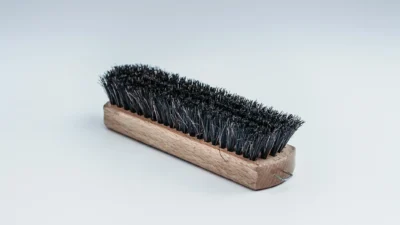
Do: Use a mild dish soap or a non-abrasive bathroom cream cleaner with a soft-bristled brush or non-scratch sponge. For stains, make a paste of baking soda and water, let it sit, then gently scrub. Regularly clean the overflow hole and pop-up stopper. Don’t: Use scouring powders, steel wool, or pour bleach directly into the drain for maintenance.
For a Hygienic Toilet
Do: Apply a dedicated toilet bowl cleaner under the rim, let it sit, then scrub with your dedicated toilet brush. Disinfect the brush by letting it sit in the bowl water for a few minutes after cleaning, then rinse and store it dry. Use disinfecting wipes for the seat (top, bottom, and hinges), handle, lid, tank, and base. Don’t: Mix chemicals, use the bowl brush on exterior surfaces, or forget to clean behind and around the toilet.
Arm yourself with a caddy containing separate microfiber cloths (for mirrors/chrome), a soft scrub brush (for sinks), a dedicated toilet brush, and gentle cleaners. Work in sequence from mirror to sink to toilet to floor to prevent recontaminating cleaned areas.
Mastering Your Bathroom Cleaning Routine
If you recognize yourself in any of these common errors, don’t worry—you’re in good company. Almost everyone has made these bathroom cleaning errors with the best of intentions. The good news is that correcting them is straightforward. It’s not about working harder, but working smarter with the right knowledge and tools.
By adopting the mindset of a hygienic protocol, separating your tools, and treating each surface with the care its material demands, you’ll transform your routine. The payoff is substantial: a bathroom that is not just superficially shiny but is genuinely sanitized, smells fresher, and whose fixtures will look new for years longer. On your next cleaning day, approach it with this new playbook. You’ll be surprised at how a few simple changes lead to a result that feels—and is—truly clean.
To avoid common bathroom cleaning mistakes and achieve a truly hygienic clean, remember these core takeaways:
- Use the Right Tool: Microfiber for mirrors and chrome, soft brushes for sinks, and a dedicated brush for the toilet bowl to prevent cross-contamination.
- Avoid Harsh Methods: Skip abrasive scrubs on sinks and toilets to prevent scratches, and never spray cleaner directly on mirrored frames.
- Clean in the Correct Order: Always work from the cleanest area (mirror) to the dirtiest (toilet, then floor) to avoid spreading germs.
- Mind the Chemicals: Never mix cleaning products, especially bleach and ammonia, and use gentle, appropriate cleaners for each surface finish.
- Don’t Skip the Hidden Spots: Lift the toilet seat to clean the hinges, address the sink overflow hole, and always clean behind the toilet.