Ever stood with a spray bottle in hand, wondering if you should spray the surface or your cloth first? It’s a simple choice, but getting it wrong can lead to wasted product, a streaky finish, or even damage to what you’re trying to clean. The debate between “spray then wipe” and “spray on cloth” isn’t just about preference—it’s about matching your technique to the task. One method prioritizes chemical power and dwell time, while the other is all about precision and control. Understanding this core difference is the key to cleaning more effectively and safely, whether you’re tackling a greasy stovetop or dusting a delicate screen.
The best way to apply spray cleaner depends on your goal. For disinfecting or tackling heavy, stuck-on grime, spray directly on the surface to ensure the cleaner dwells and works. For dusting, polishing delicate surfaces, or applying wood or stainless steel cleaner, always spray onto a microfiber cloth first to control moisture and prevent streaks or damage.
The Core Difference: Dwell Time vs. Control
At its heart, the choice between spraying the cleaner on the cloth or the surface comes down to a simple trade-off: do you need chemical power or manual precision? Understanding this fundamental principle will make every cleaning decision easier.
Spray Then Wipe is a power move. You apply the cleaner directly to the surface to maximize “dwell time”—the period the chemical sits and actively works. This is crucial for disinfectants to kill germs or for degreasers to break down tough grime. The cleaning spray technique here is about letting the product do the heavy lifting before you wipe it away.
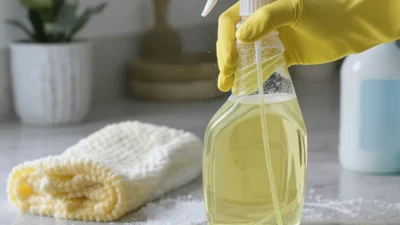
Spray on Cloth is a control play. By applying the product to your microfiber cloth first, you manage the moisture level. This prevents over-saturation, which can damage delicate finishes or leave behind streaks. This method gives you precise control over where and how much cleaner is applied, making it ideal for polishing and dusting.
| Factor | Spray Then Wipe | Spray on Cloth |
|---|---|---|
| Primary Goal | Chemical action (cleaning, disinfecting) | Controlled application (polishing, protecting) |
| Best For | Disinfecting, heavy soil, grease, bathrooms | Dusting, delicate surfaces, glass, wood, electronics |
| Key Benefit | Ensures proper dwell time for effectiveness | Prevents streaks, damage, and product waste |
| Potential Risk | Can damage sensitive finishes if over-applied | May not allow enough contact time to disinfect |
| Example Surfaces | Toilet bowl, greasy stovetop, shower wall | TV screen, wood dining table, stainless fridge |
When to Spray Directly on the Surface
This method is your go-to for tasks where the cleaner itself needs time to work. The rule is simple: if you’re fighting germs or dissolving something stubborn, spray the surface.
For Disinfecting & Sanitizing
This is non-negotiable. Disinfectants like bleach solutions or EPA-registered sprays must stay wet on the surface for a specific time (check the label) to kill bacteria and viruses. Spraying a cloth first uses up the product and starts the clock before it even touches the germy area, rendering it ineffective. Always spray directly on surface for toilets, sink handles, and other high-touch points.
For Heavy, Stuck-On Grime
Think baked-on oven spills, greasy range hood filters, or soap scum in a shower. These need a degreaser or cleaner to penetrate and loosen the mess. Applying it directly gives it time to break down the bonds, so you scrub less. A common surface spray mistake is wiping too quickly; let the product sit for a minute or two as directed.
For Large, Non-Porous Areas
Cleaning a big kitchen countertop, a tile floor, or a shower wall? Spraying the surface in sections is often faster and ensures even coverage. You can spray a manageable area, let it dwell, and then wipe, moving methodically across the space.
When to Spray Onto Your Cloth First
This technique is all about finesse. It protects surfaces from excess moisture and gives you a streak-free, polished finish. When in doubt about potential damage, choose this method.
Photo by Sukwoo (Your Boyhood) Hong on Unsplash
For Delicate or Electronic Surfaces
Television screens, computer monitors, and glossy appliances have coatings that liquid can damage. Spraying cleaner directly onto them can cause it to seep into edges or disrupt the anti-glare layer. The safe cleaning spray technique is to lightly mist a microfiber cloth, then gently wipe the surface.
For Streak-Free Glass & Mirrors
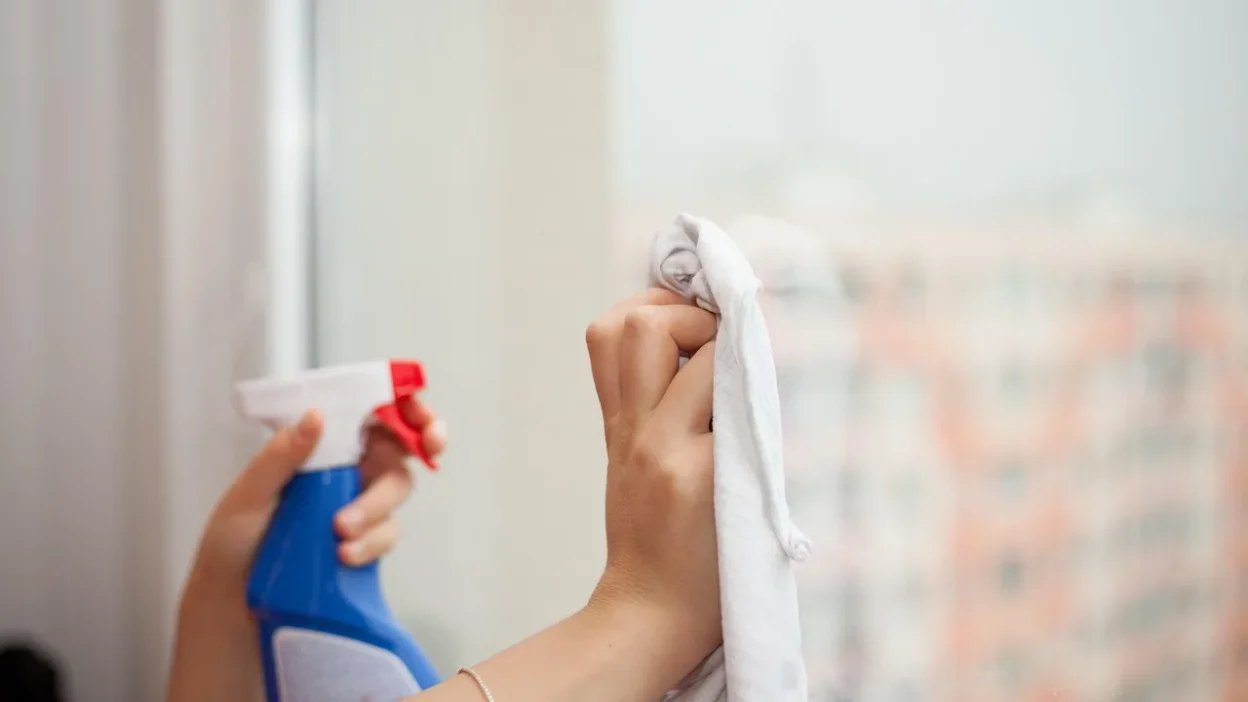
To avoid those frustrating streaks and drips on windows or mirrors, control is key. Spraying the glass directly often leads to over-application and runs. By spraying your cloth (preferably a clean, lint-free microfiber cloth), you apply a thin, even layer that dries quickly and clearly.
For Wood Furniture & Stainless Steel
Specialty cleaners for wood or stainless steel are designed to clean and often leave a protective finish. Applying them directly can create puddles that stain wood or leave uneven streaks on stainless. Spraying onto a cloth allows you to work the product in evenly, following the grain of the wood or the brush pattern of the steel for a perfect shine.
For Light Dusting & Polishing
When you’re just picking up dust or applying a polish like Pledge, a damp cloth is all you need. Spraying the cloth lightly gives you just enough moisture to trap dust without making surfaces wet. It’s also more economical, as you use far less product.
Your Quick Decision Guide
Don’t overthink it. Before you squeeze the trigger, ask yourself these quick questions to choose the right spray cleaner on cloth or surface method instantly.
- Am I disinfecting or killing germs? → YES = Spray directly on the surface. Let it dwell.
- Is the grime heavy, greasy, or stuck-on? → YES = Spray directly on the surface. Let it soak.
- Is the surface delicate, electronic, or easily streaked? → YES = Spray onto your cloth first.
- Am I dusting, polishing, or applying a specialty finish? → YES = Spray onto your cloth first.
- Is it a large, tough surface like a floor or shower wall? → Either method works, but spraying the surface is often faster.
This simple filter helps you avoid the most common surface spray mistakes and match your cleaning method comparison to the task at hand.
Choose Your Tool for the Job
So, which method wins? The practical answer is that neither is universally better. Your spray bottle isn’t just a product dispenser; it’s a tool, and these are two different techniques for using it. Spray then wipe is your tool for power—tackling germs and grime with chemical action. Spray on cloth is your tool for precision—caring for finishes and achieving a flawless shine.
The real win is moving from a random habit to an intentional choice. Next time you clean, pause for that half-second, assess the surface and the goal, and apply the technique that fits. You’ll use less product, get better results, and keep your home looking its best without unintended damage. That’s the mark of a truly effective cleaner.
Q: Can I use the ‘spray on cloth’ method with disinfectant wipes?
A: No, you should not. Disinfectant wipes are pre-moistened with a specific amount of solution designed to stay wet on a surface for the required “kill time.” If you wring them out or use them on a cloth, you reduce their effectiveness. Use the wipe directly from the container, following the label instructions for dwell time.
Q: What’s the best type of cloth for the ‘spray on cloth’ method?
A: A clean, high-quality microfiber cloth is almost always the best choice. Its tiny fibers trap dust and dirt effectively without scratching, and it holds moisture well without becoming overly saturated. For glass and mirrors, use a lint-free microfiber. Avoid paper towels for streak-prone surfaces, as they can leave behind lint and don’t absorb product as evenly.
Q: Does ‘spray then wipe’ waste more cleaning product?
A: It can, if you’re not careful. It’s easy to over-spray a large area, leading to runoff and excess product. To avoid waste, spray from a moderate distance in a light, even mist, and only cover the section you’re about to wipe. For most tasks, a few spritzes are enough—you don’t need to soak the surface.