If you’ve ever scrubbed your shower tiles or glass door spotless, only to find that filmy, chalky residue creeping back within days, you’ve likely fallen for the most common cleaning myth: that if you just scrub harder or use a stronger chemical, the soap scum will stay gone. This frustrating cycle makes it feel like a personal failure, but the truth is, soap scum keeps coming back because of a simple chemistry problem, not a lack of effort. Understanding this is the key to breaking free from endless scrubbing and moving toward safer, more effective bathroom fixes that actually last.
Soap scum returns because it’s not just surface dirt; it’s a hardened chemical bond formed when the fatty acids in soap meet the minerals (like calcium and magnesium) in hard water. To stop it from coming back, you need to break this bond with the right acidic cleaner—like vinegar or citric acid—and then maintain your surfaces to prevent the bond from re-forming. This two-step approach of proper removal and simple prevention is far more effective than just scrubbing.
The Myth: You’re Just Not Cleaning Hard Enough
When that filmy, crusty layer reappears just days after a deep clean, it’s tempting to think you need more muscle or a more aggressive chemical. This is the most common of all soap scum cleaning mistakes. You might reach for a gritty powder or a bleach-based spray, scrubbing until your arm aches. The surface might look temporarily clearer, but the victory is short-lived.
The reason this fails is that soap scum isn’t just dirt sitting on the surface; it’s a bonded deposit. Abrasive scrubs can actually etch tiny scratches into glass and acrylic, creating a rougher texture that future scum grips onto even more tightly. Harsh alkaline cleaners (like many all-purpose sprays) don’t react with the scum’s core components. You’re essentially polishing a stain that’s chemically welded to your shower wall, which is why the soap scum returns so stubbornly.
Photo by donbalon on Pixabay
The Science: Why Soap Scum is a Sticky, Returning Guest
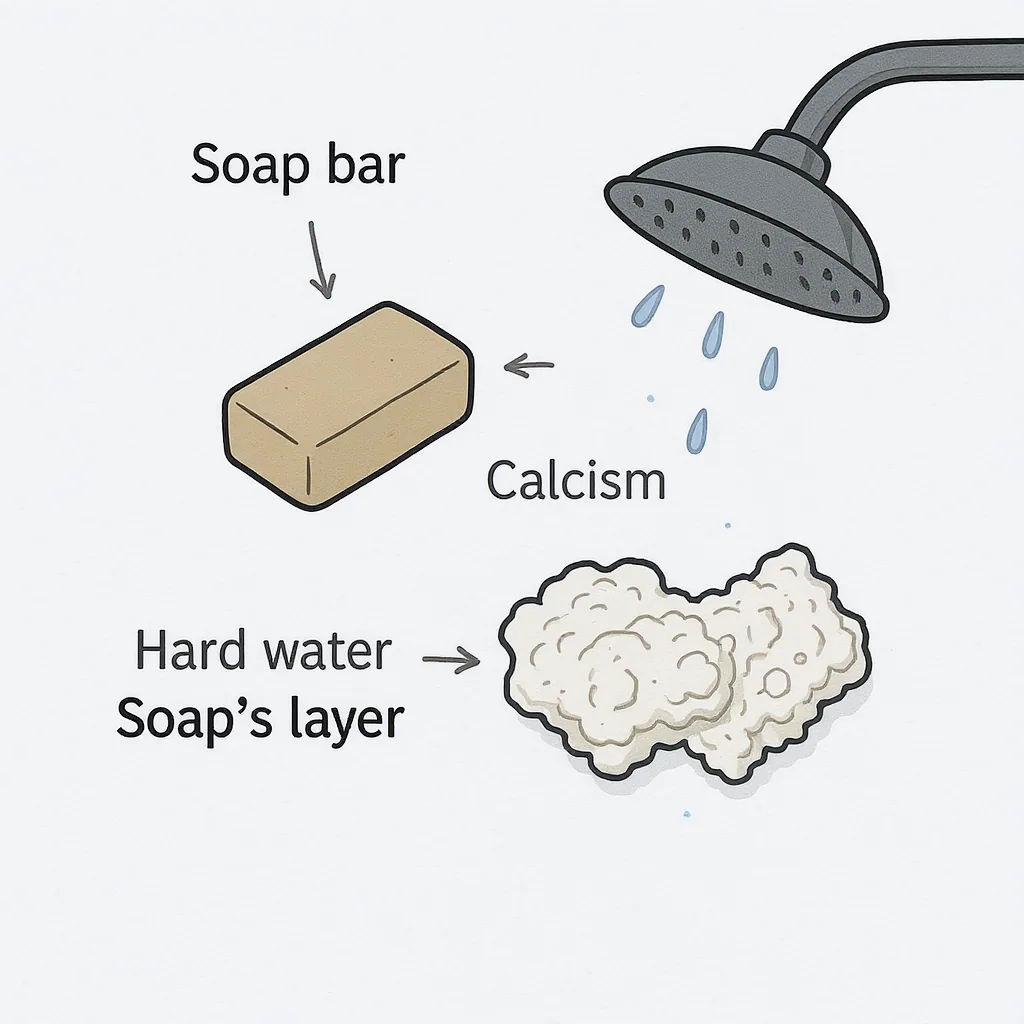
Understanding the “why” is the key to stopping the cycle. Recurring soap scum is a simple chemistry problem. Traditional bar soaps and many body washes contain fatty acids. When you wash, these fatty acids meet the dissolved minerals (primarily calcium and magnesium) found in hard water.
The reaction creates a new, insoluble substance called calcium stearate. This is soap scum. It’s a sticky, plaster-like gunk that chemically bonds to your tiles, glass, and fixtures. Once that first layer forms, it acts like a magnet, eagerly grabbing more soap and minerals from every shower, building up thicker and faster. This is the core reason your shower buildup prevention efforts have felt futile—you’ve been cleaning the symptom, not disrupting the reaction itself.
The Safer, Smarter Cleaning Protocol (That Actually Works)
To defeat hard water soap scum, you need a two-part strategy: first, dissolve the existing bond, and second, change the conditions so it can’t re-form easily. This approach is both more effective and gentler on your bathroom surfaces than brute force.
Phase 1: The Correct Removal
Since scum is a mineral-fatty salt, you need a mild acid to break the mineral bond. Common, safe options include:
- White Vinegar: A classic. Heat it slightly for better effect, spray it on, let it sit for 10-15 minutes, then wipe. The acetic acid dissolves the scum.
- Citric Acid: An even more effective chelating agent. Dissolve a tablespoon in a spray bottle of warm water. It’s odorless and great for prevent soap scum buildup when used regularly.
- Commercial Bathroom Cleaners: Look for products specifically labeled for soap scum or hard water that list acidic ingredients like glycolic or lactic acid.
Apply your chosen cleaner, let it dwell (this is crucial—the chemistry needs time), then gently wipe or scrub with a non-abrasive pad. The scum should dissolve and wipe away without a fight.
Phase 2: Intelligent Prevention
After a successful clean, your goal is to make your shower a less welcoming place for that chemical reaction.
- Dry the Surfaces: Use a squeegee or a microfiber towel on walls and doors after every shower. This removes the water film that contains the minerals and soap residue before they can meet and bond.
- Improve Ventilation: Run the bathroom fan during and for 20-30 minutes after showering to reduce ambient humidity that keeps surfaces damp.
- Consider Your Soap: Syndet bars (synthetic detergent bars) or body washes formulated for hard water are less likely to form classic soap scum.
- Apply a Protective Treatment: For glass doors, a quality rain-repellent sealant (like those used for car windows) can create a slick surface that water and scum slide right off of.
Your New Bathroom Routine to Keep Scum at Bay
Turning this knowledge into a simple, sustainable habit is how you finally stop soap scum from coming back. It’s about consistent, easy interruptions to the scum-formation cycle.
Post-Shower (30 seconds): Make squeegeeing the shower walls and door the last thing you do before stepping out. It’s the single most effective daily habit.
Weekly (5 minutes): Once a week, after your shower, lightly mist surfaces with a diluted vinegar or citric acid spray. Let it sit while you brush your teeth, then give everything a quick wipe-down with a shower sponge. This weekly acidic touch-up dissolves any microscopic buildup before it becomes visible, making deep cleans far less frequent.
This routine focuses on prevention over correction. By managing moisture and periodically disrupting the mineral-soap reaction, you spend less time scrubbing and more time enjoying a consistently clean bathroom.
Win the Battle with Chemistry, Not Elbow Grease
The frustration of seeing soap scum reappear isn’t a sign of poor cleaning—it’s a signal that you’ve been using the wrong strategy. By understanding it as a chemical bond, you can shift from a losing battle of attrition to a smarter, more effective approach. The goal isn’t to scrub harder every few weeks, but to implement simple habits that prevent the bond from forming in the first place.
Start with the correct acidic cleaner to dissolve what’s there, then commit to the post-shower dry-down. With this knowledge, your bathroom can stay cleaner with significantly less effort, freeing you from the cycle of soap scum reappears. You’re not just cleaning; you’re outsmarting the problem for good.