You might think a mop is just a mop, but grabbing the wrong one can turn a simple chore into a frustrating battle against streaks, wasted effort, or even floor damage. The real choice isn’t about which tool is universally “best,” but which one is right for your specific floor and the mess you’re facing. This practical guide cuts through the marketing hype to compare the traditional mop, the spray mop, and the microfiber pad on their true merits: helping you match the tool to the task for faster, more effective cleaning.
The best way to choose between a traditional mop, a spray mop, and a microfiber pad is to match the tool to your specific floor type and cleaning job. Use a traditional mop for deep cleaning large, durable areas like tile. A spray mop is ideal for quick, daily cleaning of sealed hard surfaces. A microfiber pad on a flat mop is perfect for dusting, light cleaning, and delicate floors like hardwood.
The Core Strengths: What Each Tool Is Built For
To cut through the noise in the floor cleaning tools comparison, you need to understand the fundamental job each tool is designed to do. This isn’t about which is universally “best,” but which is right for the task at hand.
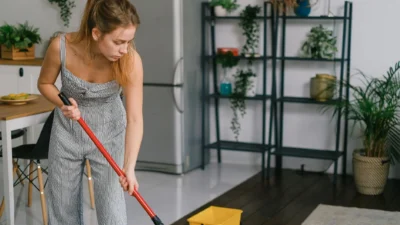
Photo by Maxim Yuryshev on Unsplash
The Traditional Mop: For Deep Cleaning Power
Think of the classic string or sponge mop as your heavy artillery. Its strength lies in its ability to hold and apply a large volume of cleaning solution, which is essential for breaking down stuck-on grime, sanitizing, and scrubbing textured surfaces like grout lines. It’s built for a thorough, deep clean but requires more physical effort and involves a bucket of water.
The Spray Mop: For Controlled Convenience
A spray mop is essentially a flat mop with a built-in trigger and bottle. Its superpower is precision and speed. You spray cleaning solution directly onto the floor in front of the mop head, so you control exactly where and how much cleaner is applied. This makes it ideal for tackling sticky spots or giving sealed hard floors a quick, refreshed clean without the hassle of a bucket.
The Microfiber Pad: For Gentle, Effective Capture
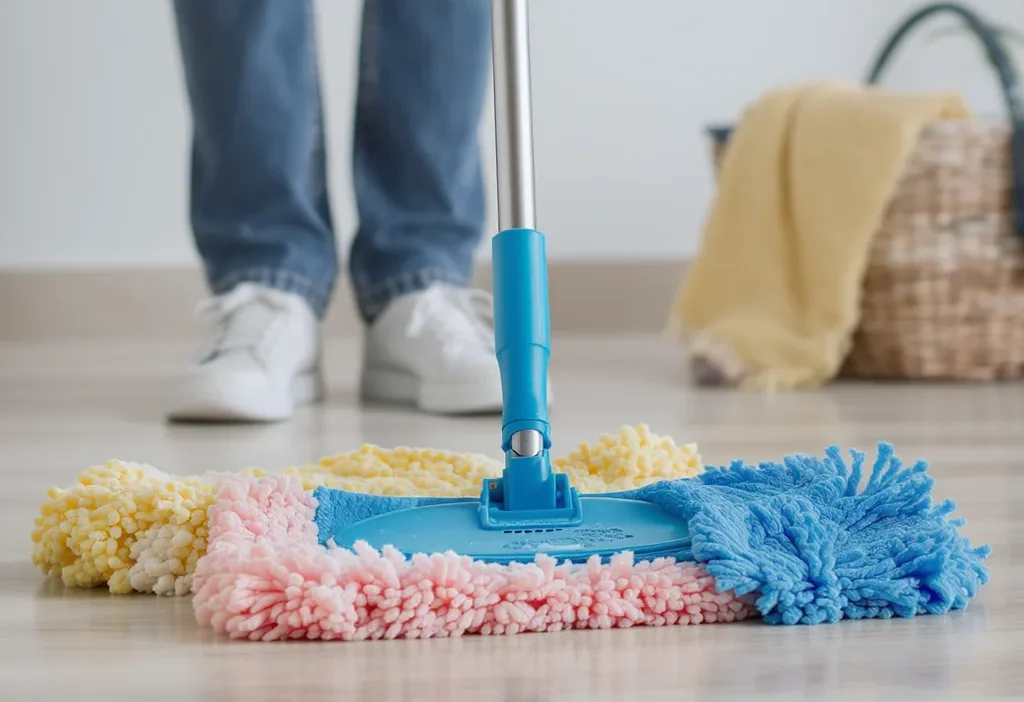
Often used on a flat mop frame, a microfiber pad isn’t about applying liquid. Its design is for capturing and holding dust, dirt, and hair. Used dry, it’s an exceptional dust mop. Dampened with water or a mild cleaner, it can lift light soil and give floors a polished finish with minimal moisture, making it the safest choice for delicate surfaces like hardwood.
| Attribute | Traditional Mop | Spray Mop | Microfiber Pad (on flat mop) |
|---|---|---|---|
| Best For | Deep cleaning, scrubbing grout, large messy areas | Quick cleans, targeted spot cleaning, daily maintenance | Dusting, light cleaning, polishing, delicate floors |
| Floor Types | Durable tile, sealed concrete | Sealed hard surfaces (laminate, vinyl, sealed tile) | Hardwood, laminate, vinyl, tile (for dusting) |
| Cleaning Power | High (for wet, heavy soil) | Medium to High (for light-to-moderate soil) | Low to Medium (for dust & light soil) |
| Effort & Speed | High effort, slower setup/cleanup | Low effort, very fast for targeted jobs | Low effort, fastest for dry/dust mopping |
| Maintenance | Needs bucket; mop head must be rinsed/wrung | Bottle refill; pad needs washing | Pad must be laundered regularly |
Your Decision Points: Floor Type, Mess Level, and Effort
Choosing the best mop type for your floors comes down to three practical factors. Match these to the tool strengths, and the right choice becomes clear.
1. Your Floor Surface
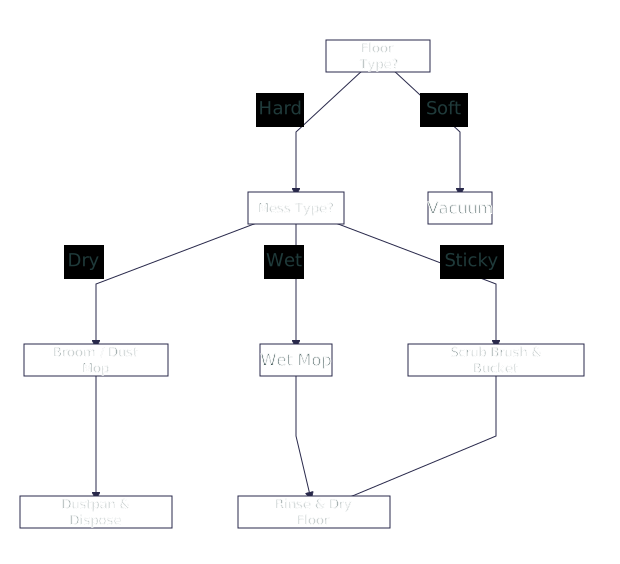
This is your non-negotiable starting point. Hardwood and other sensitive surfaces demand minimal moisture. A damp microfiber pad is often the safest bet. For sealed tile, laminate, or luxury vinyl plank, you have more flexibility and can choose based on the mess. Always check your floor manufacturer’s care guidelines—this article offers general educational advice, not a substitute for specific product instructions.
2. The Type and Level of Dirt
Is it a layer of dust and pet hair? A sticky juice spill? Or ground-in mud and grimy grout lines? Light, dry debris is a job for a microfiber pad. Fresh, sticky spills are perfect for a spray mop. For that built-up, greasy grime, you’ll likely need the soaking and scrubbing power of a traditional mop.
3. Your Cleaning Goal
Are you doing a five-minute “refresh” before company arrives, or a monthly deep clean? Your desired speed and thoroughness directly point to the right tool. Quick tasks favor the spray mop or microfiber pad; deep cleans call for the traditional mop.
Scenario Guide: Which Tool to Reach For
Let’s apply the decision points to real situations. This is where the mop vs spray mop vs microfiber pad debate gets practical.
Weekly Kitchen Tile Cleaning (Grease & Food Spills)
Reach for: Spray Mop or Traditional Mop. For sealed tile with light grease and recent spills, a spray mop with an all-purpose cleaner is efficient. If grout lines are dirty or it’s been a while, the deep saturation of a traditional mop and a scrub brush attachment will be more effective.
Dusting Hardwood Floors Before Guests Arrive
Reach for: Microfiber Pad (dry or slightly damp). This is the ideal scenario for a microfiber pad on a flat mop. It silently captures dust and hair without risking water damage, leaving a streak-free, polished look in minutes.
Cleaning Up a Pet Accident on Laminate
Reach for: Spray Mop. You need to apply a pet-safe cleaner specifically to the soiled area without overwetting the surrounding floor. The targeted spray function lets you clean and sanitize the spot efficiently, then you can go over it with a clean, damp microfiber pad to remove any residue.
Giving a Bathroom Floor a Monthly Scrub
Reach for: Traditional Mop. Bathroom tile and grout often harbor soap scum and mildew. The traditional mop’s ability to apply plenty of hot, soapy water and allow for dwell time, followed by scrubbing and a clean-water rinse, is unmatched for this deep-cleaning job.
The Hybrid Approach: Why You Might Need More Than One
The most effective cleaning strategy often involves using more than one tool. The “vs.” in mop vs spray mop vs microfiber pad frequently becomes an “and.” Think of them as a team with specialized roles.
For example, in a home with mixed flooring, you might use a dry microfiber pad for daily dusting, a spray mop for weekly cleans of kitchens and bathrooms, and pull out the traditional mop for a quarterly deep clean of all tile floors. This hybrid approach is both efficient and thorough, ensuring each tool is used for what it does best. Investing in a versatile flat mop handle that accepts both disposable and reusable microfiber pads can be a great start, letting you handle both dusting and light wet cleaning with one system.
Make Your Choice and Clean Smarter
The right floor cleaning tool saves you time and protects your floors. Don’t overthink it: simply look at your most common messes and your dominant floor type. If you mostly deal with dust on hardwood, a microfiber system is your workhorse. If sticky kitchen spills on tile are your nemesis, a spray mop will be your best friend. For those periodic deep cleans, a traditional mop still earns its keep.
Your next step is simple. Audit your home’s floors and your typical cleaning challenges. Then, choose the one tool that aligns closest to your primary need. You can always add a second tool later as your needs evolve. The goal isn’t to own every mop, but to own the right one for you.
Q: Can I use a spray mop on hardwood floors?
A: You can, but with caution. Only use a hardwood-safe cleaner and avoid oversaturating the floor. Spray lightly directly onto the microfiber pad first, not the wood, and mop quickly. For routine cleaning, a damp (not wet) microfiber pad is often safer and equally effective.
Q: Are microfiber pads reusable, and how do I clean them?
A: Yes, most are reusable. Wash them separately in warm water without fabric softener or dryer sheets, as these clog the fibers. You can air dry or use a low-heat dryer cycle. Regular washing restores their cleaning power and is more economical and eco-friendly than disposable pads.
Q: Is a traditional mop obsolete compared to newer options?
A: Not at all. For large-area deep cleaning, sanitizing, or tackling heavily soiled, textured floors (like grout), the traditional mop’s capacity and scrubbing ability are still superior. It’s less about daily convenience and more about periodic, heavy-duty cleaning power.
Q: What’s the best all-in-one mop for small apartments?
A: A versatile flat mop system with a reusable, washable microfiber pad is a fantastic all-rounder for small spaces. It handles daily dusting and, when lightly dampened, can manage most light cleaning on sealed hard surfaces. It’s compact, requires no bottles or buckets, and is gentle on all floor types.