You’ve just cleaned your bathroom mirror, stepped back to admire your work, and there they are: those infuriating mirror streaks after cleaning. It’s like looking through a window on a drizzly day—the view is there, but it’s obscured by a hazy film. This common frustration isn’t a sign of bad glass or your cleaning inadequacy; it’s a simple physics problem. The streaks aren’t scratches, but a calling card left behind by the cleaning process itself. Understanding this “why” is the first, crucial step to a perfectly clear reflection. In this guide, we’ll demystify the science of streaks and then give you a straightforward, foolproof protocol to banish them for good.
The best way to clean a mirror without streaks is to use a simple, residue-free solution like diluted vinegar or dish soap, a clean, lint-free cloth (microfiber or newspaper), and a final buff with a dry cloth. The key to preventing mirror streaks after cleaning is removing all cleaning solution and moisture, not just smearing it around.
The Simple Science Behind Mirror Streaks
To fix the problem, you first need to understand it. Those frustrating lines on your mirror aren‘t scratches. They are leftover residue suspended in a thin film of water that has evaporated unevenly. Think of it like a puddle drying on a sidewalk—the water disappears, but the dirt it carried is left behind in a visible pattern.
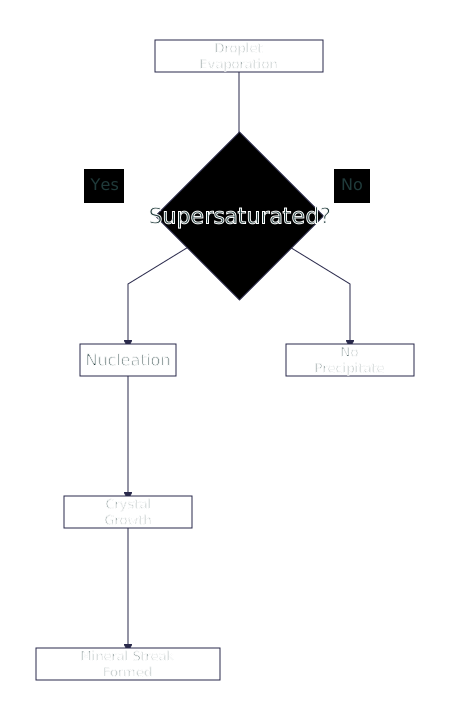
Your cleaning solution—whether it’s water, a commercial spray, or a homemade mix—dissolves dirt, oils, and minerals. When you wipe, you spread this dirty water into an ultra-thin film. If the water evaporates before you fully remove it, the dissolved solids (like minerals from hard water or soap from your cleaner) get deposited right onto the glass. This is the fundamental reason why your mirror streaks after cleaning. The streak is the “footprint” of that evaporating water film.
What Works: The Streak-Free Cleaning Protocol
Forget fancy products. A perfect, streak-free shine comes down to three things: a residue-free solution, the right tools, and a proper technique. Follow this protocol for consistent results.
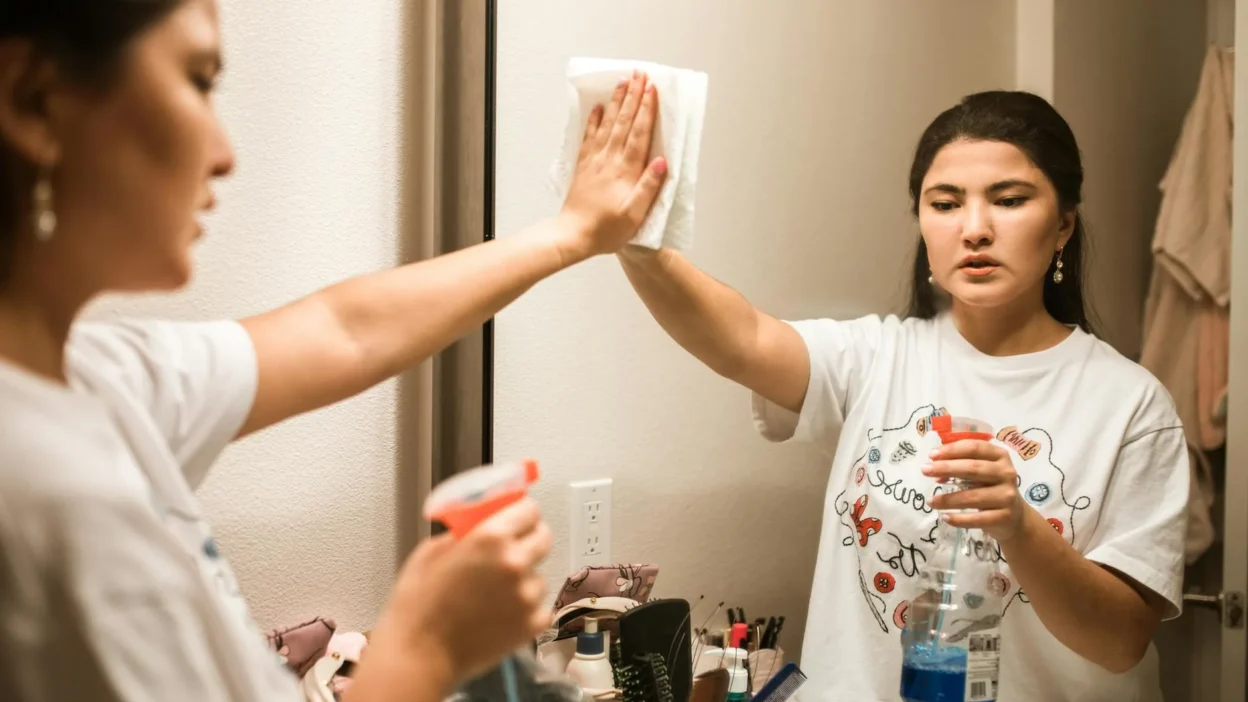
Photo by Kristine Wook on Unsplash
The Ideal Solution
You want something that cuts grease but doesn’t leave a film. Two excellent options are:
- Dish Soap & Water: A drop of blue dawn dish soap in a spray bottle of water. It’s a superb degreaser that rinses clean.
- White Vinegar & Water: A 1:1 mix of distilled white vinegar and water. Vinegar dissolves mineral deposits (hard water spots) and evaporates completely.
Avoid glass cleaners with added waxes, conditioners, or heavy fragrances, as these are designed for car windows and often leave a residue on vertical surfaces.
The Right Tools
Your cloth is as important as your cleaner. You need two: one for applying/cleaning, one for drying/buffing.
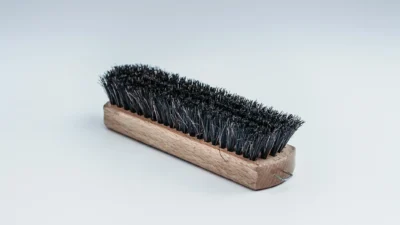
- Primary Wipe: A clean, high-quality microfiber cloth or crumpled newspaper (the newsprint acts as a mild abrasive and leaves no lint).
- Final Buff: A second, perfectly dry microfiber cloth. A waffle-weave or plush-style microfiber is ideal for absorbing all moisture.
The Correct Technique
- Spray lightly onto your first cloth, not directly on the mirror, to prevent overspray and drips.
- Wipe in one direction with overlapping strokes to lift dirt. Don’t scrub in circles.
- Immediately follow with your dry buffing cloth. Using firm pressure, buff the entire surface dry. This critical step removes the cleaning solution and moisture before it can evaporate and leave streaks.
Common Mistakes That Guarantee Streaks
Most bathroom mirror cleaning mistakes sabotage the process before you even start. By understanding these errors, you can avoid them completely.
Don’t use a dirty or linty cloth. Old t-shirts, paper towels, and used sponges redistribute lint and old grime. Instead, use dedicated, clean microfiber cloths and wash them regularly without fabric softener.
Don’t spray cleaner directly onto the glass. This often leads to using too much product, which pools at the bottom and creates thick, stubborn streaks as it dries. Instead, spray onto your cloth for better control.
Don’t clean in direct sunlight or a hot, steamy room. Heat causes the cleaning solution to evaporate almost instantly, depositing streaks faster than you can buff them away. Instead, clean when the room is cool, or close the blinds.
Don’t use all-purpose cleaners or products with wax/oil. These are formulated for countertops and floors, not glass. They leave a filmy residue that attracts dust and causes haze. Instead, stick to the simple solutions mentioned in the protocol.
Troubleshooting Persistent Streaks
Even with good technique, some mirrors have legacy issues. Here’s how to tackle specific problems.
Hard Water Stains & Mineral Buildup
If you see cloudy spots or white film, minerals have bonded to the glass. Vinegar is your best friend here. Soak a cloth in straight white vinegar, lay it over the stain for 5-10 minutes, then scrub gently. For very old buildup, a single-edge razor blade held at a 45-degree angle can safely scrape it off—just keep the glass wet.
Hazy Edges from Hairspray or Overspray
This sticky film repels water and causes immediate streaking. Use a degreasing solution like diluted dish soap or isopropyl alcohol (mixed 1:1 with water) to cut through the residue before your final clean.
Streaks That Reappear Instantly
If you buff the mirror clean and streaks materialize seconds later, you have an invisible film of old cleaner or wax. The solution is to strip it off. Wash the mirror thoroughly with a solution of warm water and a few drops of dish soap, then rinse with a cloth dipped in clean water, and dry immediately. This resets the surface.
Your Clear Reflection Awaits
Achieving a streak-free mirror isn’t about finding a magical product. It’s about understanding the simple science of evaporation and residue, then applying a consistent, mindful technique. The protocol of a light solution, clean tools, and immediate buffing works because it respects that science.
Don’t be discouraged by past attempts. Your mirror isn’t defective, and you’re not doing it “wrong”—you just needed the right information. Try the method outlined here just once. When you see that perfect, undistorted reflection, you’ll realize that the clearest view comes from a bit of knowledge and the right cloth.