You might think watering down your concentrated cleaner is a smart way to save money, but the truth is counterintuitive: the most common cleaning dilution ratio mistakes actually waste product and leave surfaces dirty or sticky. Getting the mix right isn’t just about following a recipe; it’s a simple science that balances cleaning power, safety, and your wallet. A diluted cleaner that’s too weak won’t cut through grease, while one that’s too strong can leave a filmy residue and is a needless expense. This guide cuts through the guesswork, explaining the straightforward logic behind all-purpose cleaner dilution and other common mixes, so you can clean effectively every time without second-guessing your bottle.
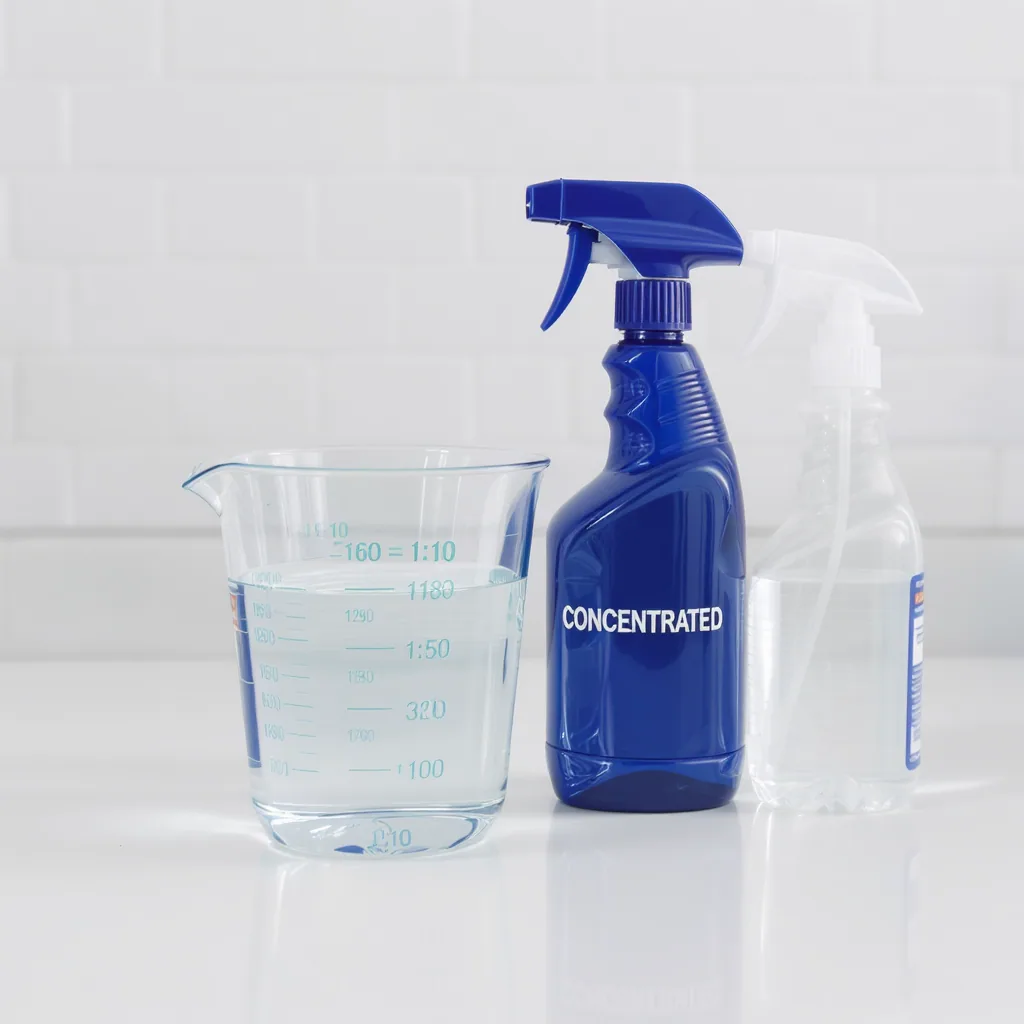
The best way to avoid cleaning dilution ratios mistakes is to always read the product label first, as ratios vary. For a typical all-purpose cleaner, a 1:10 or 1:16 ratio (concentrate to water) is common. Using too little concentrate wastes your effort; using too much wastes money and can leave residue. Measure accurately with a dedicated cup for consistent results.
The Simple Science Behind Dilution Ratios
Think of dilution like making lemonade. Too little concentrate and it’s just flavored water; too much and it’s unpalatably strong. The goal is the perfect balance where it works. For cleaners, this balance is called the minimum effective concentration—the precise amount of active ingredients needed to cut through grease, lift dirt, or kill germs without wasting product.
Concentrated cleaners are packed with powerful agents like surfactants (which break surface tension to lift grime) and disinfectants (which kill microorganisms). When you add water, you’re not just weakening the product; you’re activating it and allowing it to spread evenly. A ratio like 1:10 simply means 1 part concentrate to 10 parts water. Getting this right ensures the diluted cleaner effectiveness is optimal. Using more concentrate than recommended often doesn’t clean better—it can leave a sticky residue that actually attracts more dirt. As research from the University of Massachusetts Amherst on surfactant chemistry notes, the proper concentration is critical for the molecules to form effective structures called micelles that trap and remove soil.
Photo by Ron Lach on Pexels
Standard Ratios for Everyday Cleaners (What Works)
While your product label is the ultimate authority, these general guidelines are excellent starting points for proper dilution for cleaning. Always use cool or warm water, as hot water can break down some active ingredients.
All-Purpose Cleaners
This is your workhorse. A typical all purpose cleaner dilution is 1:10 or 1:16 (concentrate to water). In practical terms, that’s about 1 ounce of concentrate per 10 ounces of water for a small spray bottle, or roughly ½ cup (4 oz) per gallon of water for bucket cleaning.
Glass & Window Cleaners
These require a weaker solution to prevent streaking. A common ratio is 1:32 or about ¼ ounce per 32-ounce spray bottle. Precision here is key for a streak-free shine.
Disinfectants & Sanitizers
Never guess here. These products are regulated, and their germ-killing power is validated at a specific cleaning solution strength. Ratios are often listed as ounces per gallon (e.g., 2 oz per gallon) and must be followed exactly, with a required “dwell time” on the surface.
Floor Cleaners (Vinyl, Tile, Laminate)
To avoid a filmy buildup, these are usually diluted more heavily. A standard is ¼ cup per gallon of water (a 1:64 ratio). Using too much is a common cause of sticky, quickly re-soiled floors.
The Costly Mistakes Everyone Makes (What Doesn’t Work)
Most cleaning dilution ratio mistakes stem from good intentions but lead to poor results. Let’s break down the most common errors.
Mistake 1: Eyeballing the Measurements
Don’t: Pour a “glug” of concentrate into your bottle and top it with water.
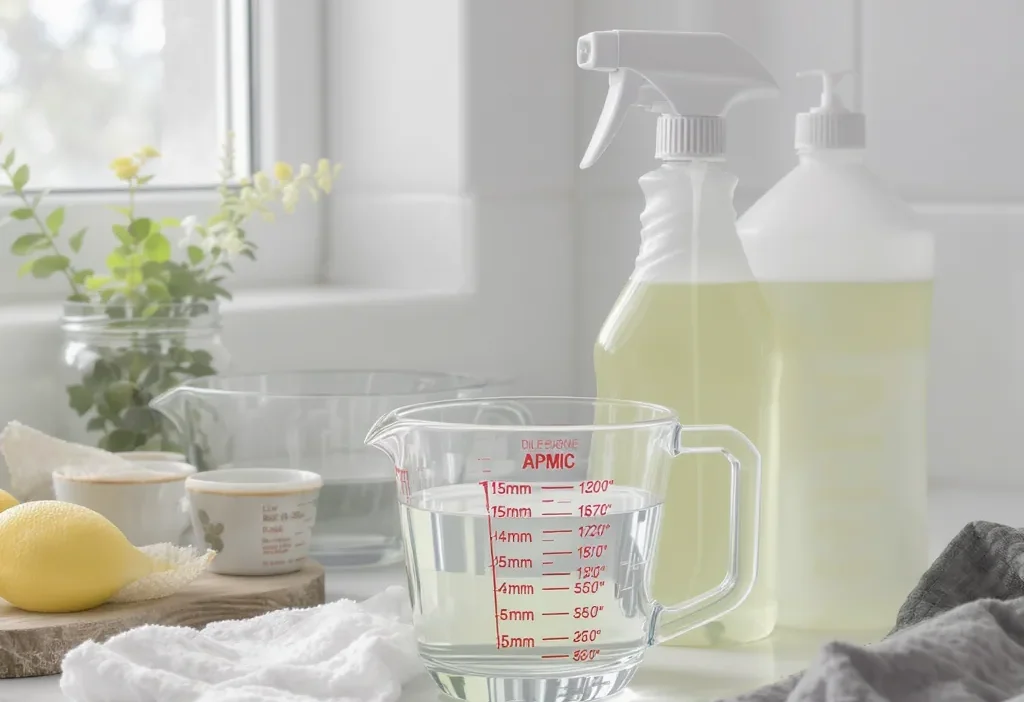
Do: Use a dedicated measuring cup or the cap that came with the concentrate. Consistency is impossible without measurement, leading to erratic diluted cleaner effectiveness.
Mistake 2: Using a “One-Ratio-Fits-All” Approach
Don’t: Use your all-purpose cleaner ratio for your disinfectant or floor cleaner.
Do: Treat each product as unique. A disinfectant requires a specific concentration to kill pathogens; using an all-purpose ratio renders it useless for sanitizing.
Mistake 3: Over-Diluting to “Save Money”
Don’t: Stretch a bottle of concentrate by using half the recommended amount.
Do: Understand that this is a false economy. The cleaner won’t work, so you’ll scrub harder, use more towels, and likely have to re-clean. You’re saving pennies but wasting effort.
Mistake 4: Under-Diluting for “Extra Power”
Don’t: Double the concentrate because a surface is extra dirty.
Do: Clean twice if needed. Excess concentrate won’t evaporate properly, leaving a soapy film that acts as a dirt magnet, making your next clean even harder.
Mistake 5: Mixing Different Concentrates
Don’t: Create a “super cleaner” by combining products.
Do: Never mix chemicals. This can create dangerous gases (like mixing bleach and ammonia) or neutralize the active ingredients in both products. Clean in separate steps instead.
Troubleshooting Your Dilution Problems
If your cleaning results are off, the issue is often your mixing ratios for cleaners. Here’s a quick diagnostic guide.
Problem: Streaky Windows or Mirrors
Likely Cause: Too much concentrate. The surfactants aren’t rinsing clean.
Fix: Remeasure, using a slightly weaker ratio (e.g., move from 1:16 to 1:24). Always use a microfiber cloth for final buffing.
Problem: Sticky Floors or Countertops
Likely Cause: Too much concentrate. Residue is left behind after the water evaporates.
Fix: Mop or wipe the surface again with clean water only to remove the film. For the next clean, use less concentrate.
Problem: Dirt or Grease Isn’t Lifting
Likely Cause: Too little concentrate. The solution lacks the necessary cleaning agents.
Fix: Check the label and measure accurately. For heavy grease, pre-treat with a bit of full-strength solution before cleaning with the properly diluted mix.
Problem: No Suds or Bubbles
Note: Suds don’t equal cleaning power. Many effective modern cleaners are low-sudsing. However, a complete lack of any activity might indicate severe concentrate dilution errors or an expired product.
The single best habit to avoid all this? Keep a plastic measuring cup solely for cleaning products—never use your kitchen cups—and always read the label first.
Master Your Mix, Maximize Your Clean
Getting your cleaning dilution ratios right isn’t about chemistry expertise; it’s about adopting a simple, mindful habit. It’s the small act of reaching for a measuring cup instead of guessing that pays off in spotless surfaces, longer-lasting supplies, and real savings. You prevent the frustration of re-cleaning and the waste of money down the drain—literally.
Today, pick one concentrated cleaner you use often. Check its label, find the correct ratio, and commit to measuring it just once. You’ll immediately feel the difference in your results. That’s the power of precision, and it’s now in your hands.