You open the cabinet under your sink or the door to that basement storage closet, ready to tackle a mess, only to be met with a different one entirely. The baking soda is a solid brick. Your favorite scrub brush has a faint, fuzzy coat. The bleach bottle feels tacky, and a musty smell hangs in the air. If this scene is familiar, you’ve met the silent enemy of any organized home: humidity. Storing cleaning supplies in humid areas isn’t just an organizational challenge—it’s a battle against chemistry that ruins products, wastes money, and leaves you unprepared. The good news is that winning this battle doesn’t require a major renovation. It comes down to a clear, two-part strategy: first, assembling the right moisture-blocking tools and materials, and then committing to a simple, sustainable routine to maintain them.
Effective cleaning supply storage in humid areas requires airtight, moisture-resistant containers and strategic placement away from direct dampness, combined with simple monthly checks to maintain integrity. The core solution is to decant powders into glass jars, store liquids in sealed plastic bins rather than on bare shelves, and use silica gel packs to absorb ambient moisture. Always keep supplies away from obvious humidity sources like under-sink pipes or exterior walls, and make a habit of wiping down bottles and checking container seals during your regular cleaning sessions.
Why Humidity Wrecks Your Cleaning Supplies
Humidity isn’t just uncomfortable for you—it’s actively destructive to your cleaning arsenal. Understanding how moisture attacks your supplies is the first step to fighting back. At its core, high relative humidity provides the perfect environment for chemical changes and physical degradation.
For powdered cleaners like baking soda or scouring powders, moisture in the air causes particles to clump together into a solid, unusable brick. Liquid cleaners, especially concentrates, can become diluted as condensation forms inside the bottle, weakening their effectiveness. More critically, moisture reacts with certain chemicals, causing corrosion. This is why the metal springs in spray bottles rust and seize up, and why bleach can degrade faster in damp conditions.
Perhaps the most visible damage is biological. Sponges, mop heads, and scrub brushes that are stored even slightly damp become breeding grounds for mold and mildew—turning your damp cleaning tools into sources of grime rather than solutions for it. A study from the University of Georgia Extension on indoor humidity and material damage highlights how sustained moisture accelerates the breakdown of many common household materials, including plastics and textiles.
Your Humidity-Fighting Storage Toolkit
Arming yourself with the right materials turns a losing battle into a manageable routine. The goal is to create micro-environments that lock moisture out. Here’s your essential toolkit for organizing cleaning supplies in humid climates.
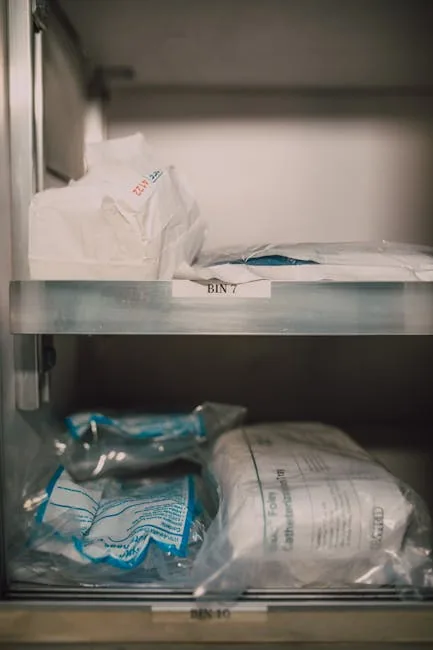
Photo by RDNE Stock project on Pexels
Airtight, Moisture-Resistant Containers
This is your first and most important line of defense. Transfer anything that comes in cardboard (like dishwasher pods) or flimsy plastic bags into solid containers. Look for options with locking, silicone-gasketed lids that create a true seal. Popular examples of this design include OXO Pop containers or Rubbermaid Brilliance bins. For liquids, consider using glass jars with clamp lids for things like homemade solutions, as glass is completely impervious to moisture.
Strategic Desiccants
Silica gel packs are your secret weapon. Toss a few into every storage bin, cabinet, or bucket. They passively absorb ambient moisture, protecting the contents. For larger spaces like a basement cleaning closet, a renewable dehumidifying bucket or hanging moisture absorber can make a significant difference.
Smart Organizers
Get supplies up and away from the floor, where humidity often pools. Use wall-mounted racks or over-the-door organizers to keep brushes and sprays in the airier part of a room. For under-sink storage—a classic problem area for bathroom cleaning supply storage—use a raised, slotted shelf inside the cabinet to allow for air circulation and to keep bottles out of any potential pooled water.
What Not to Do: Common Storage Fails
Sometimes, knowing what to avoid is just as valuable as knowing what to do. Steer clear of these common mistakes that invite moisture damage.
Don’t store liquids directly under sinks without a barrier. Pipe condensation and slow leaks are common, and that environment will quickly ruin labels and degrade plastic bottles.
Don’t leave powdered cleaners in their original cardboard boxes. Cardboard acts like a sponge, pulling moisture from the air and transferring it directly to the powder, guaranteeing clumps.
Never toss wet tools into a closed bucket or dark closet. Sealing a damp mop head in a dark space is a guaranteed recipe for mildew. This is the fastest way to ruin damp cleaning tools permanently.
Avoid wire shelving without liners in damp areas. Condensation can form on metal shelves and drip onto your supplies below. Use solid plastic or wooden shelf liners to create a protective barrier.
Don’t ignore visible condensation. If you see water droplets on bottles or the inside of a cabinet door, that’s a red flag. Your current storage method isn’t working, and damage is already occurring.
A Simple Routine for Humid Areas
Proper tools are useless without simple habits. This isn’t about daily deep cleans; it’s about integrating a few quick checks into your existing monthly or seasonal cleaning routine. When you’re already wiping down shelves, add these steps.
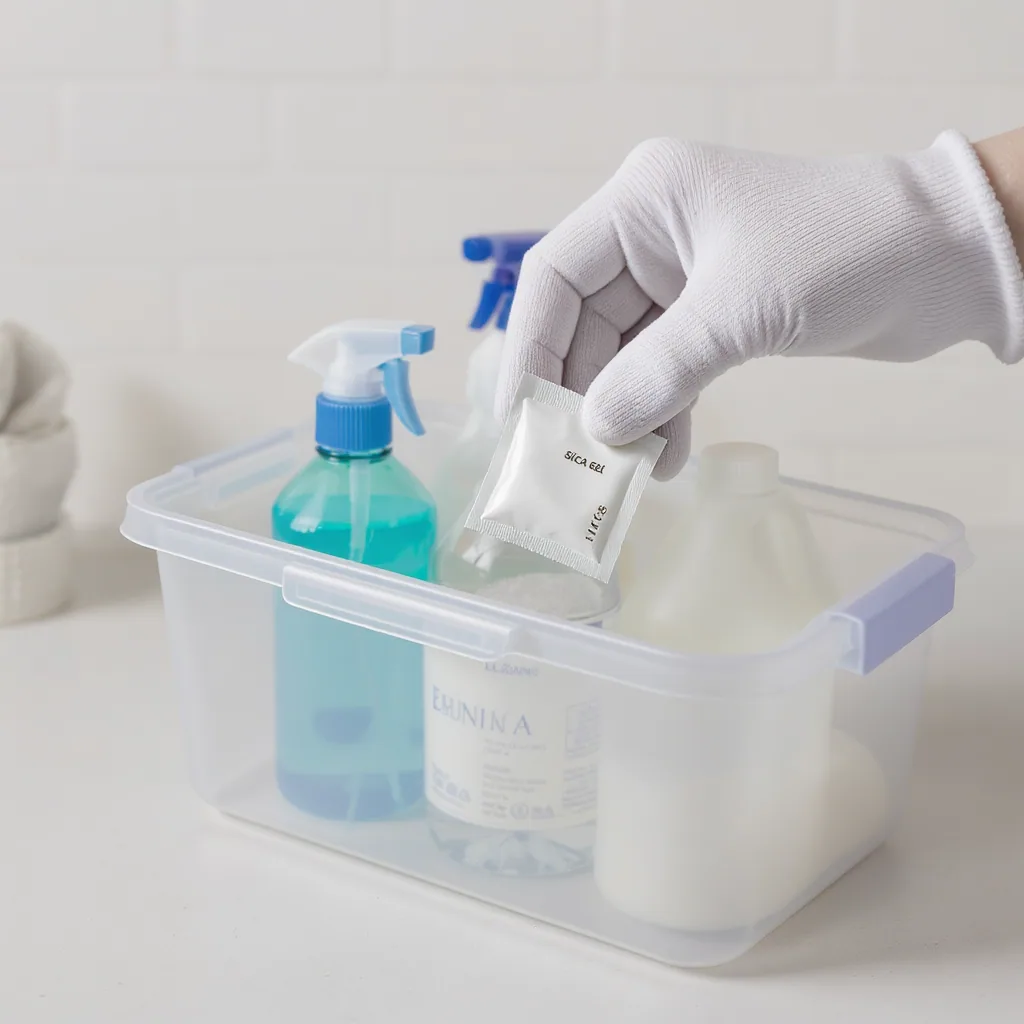
First, inspect and wipe. Check the seals on your airtight containers. Are they still flexible and clean? Quickly wipe down the outside of all bottles and jars to remove any moisture or residue that could trap dampness.
Next, refresh your defenses. Replace or recharge your silica gel packs according to the package instructions. If you use a hanging closet dehumidifier, check the indicator and replace it if it’s full.
Then, do a leak and clutter audit. Look for any signs of leaks under sinks or near stored supplies. Finally, declutter. Get rid of any half-used, expired, or questionable products. Reducing clutter improves air circulation and makes maintenance easier, helping you protect cleaning supplies from moisture long-term.
Stop Humidity from Wasting Your Money and Time
Dealing with humidity is less about a single grand gesture and more about consistent, smart choices. By investing in a few airtight containers and adopting a simple monthly check-in, you shift from reactive frustration to proactive control. This small upfront effort prevents the waste of ruined products, saves you money on replacements, and—most importantly—ensures your cleaning supplies are effective and ready when you need them. Your best next step? Pick one problem area today, like under the bathroom sink, and give it the humidity-fighting upgrade it needs.