You reach for your kitchen sponge, ready to tackle a dirty dish, and are immediately met with that damp, musty odor. Instead of lifting grime, it just smears it around, leaving a faint, greasy trail. This frustrating experience is a direct result of common reusing dirty sponges mistakes, turning a tool meant for cleaning into a source of mess and bacteria. If you’ve ever wondered why a simple sponge becomes a smelly, ineffective nuisance so quickly, you’re not alone. The good news is that the causes are understandable and the fixes are simple. This guide will walk you through exactly why odor and smears happen and give you practical, no-fuss solutions to keep your sponge fresh and functional.
Odor and smears happen because food debris and moisture trapped in a sponge create a perfect environment for bacteria and mold to form a slimy biofilm. The simple fix is to clean your sponge properly after each use, ensure it dries completely, and replace it regularly—not just when it falls apart. By addressing these core issues, you can break the cycle of sponge hygiene mistakes and maintain a cleaner, more effective tool for your kitchen.
The Science of a Smelly, Smearing Sponge
That unpleasant odor and the way a sponge just pushes grease around instead of lifting it aren’t random annoyances—they’re clear signs of what’s happening inside the sponge’s structure. At its core, a kitchen sponge is a perfect bacterial incubator by design. Its porous, absorbent material is meant to hold soap and water, but it also traps tiny food particles, fats, and moisture.
This trapped organic matter becomes a feast for common household bacteria, like Pseudomonas, which thrive in damp environments. As these microbes multiply, they form a slimy, cohesive layer called a biofilm. This biofilm is the source of the musty, sour smell. According to food safety research from institutions like the USDA, biofilms are notoriously difficult to remove and protect bacteria from sanitizers.
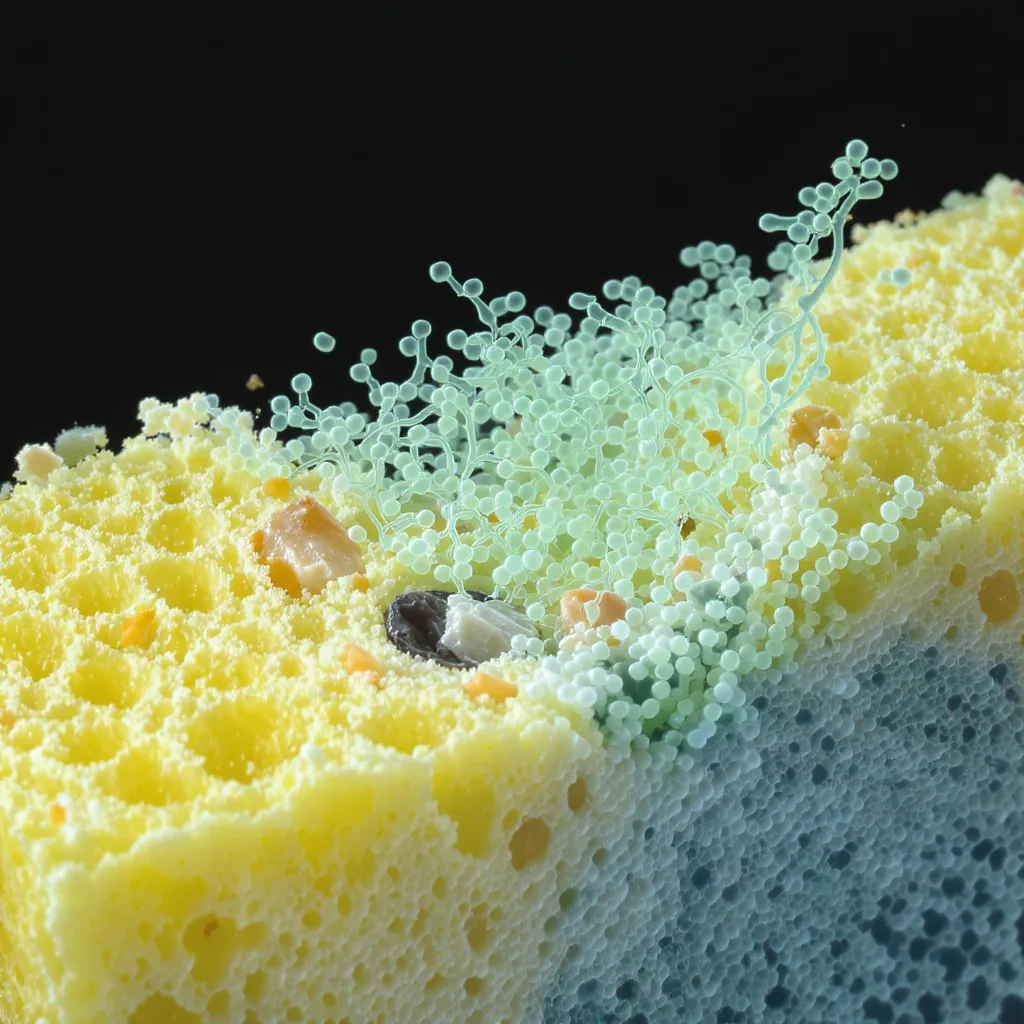
Simultaneously, the physical structure of the sponge is breaking down. Constant use, squeezing, and exposure to food debris degrade the cellulose or foam material. The once-firm scrubbing surface becomes mushy and loses its ability to trap grime. Instead, it flattens food particles and grease against your counter or plate, creating those frustrating smears. The problem isn’t just dirt; it’s a combination of bacterial waste and a worn-out tool.
Your Daily Sponge Routine: What’s Going Wrong?
Most sponge hygiene mistakes happen without us realizing it. They’re small habits that seem harmless but directly feed into the cycle of odor and smears. Let’s diagnose a few common routines.
Leaving It Wet in the Sink or Dish Rack
If you finish washing up and toss the sponge into a wet sink bowl or lay it flat on a crowded dish rack, you’re preventing it from drying. Bacteria need moisture to grow. A sponge that stays damp for hours is essentially a petri dish, accelerating biofilm formation and that classic smelly sponge outcome.
Not Rinsing It Thoroughly After Use
Giving your sponge a quick shake under the tap after wiping down a greasy pan isn’t enough. Microscopic fats and food particles remain deep in the pores. Over the day, this residue builds up, providing a constant food source for bacteria and clogging the sponge’s cleaning ability, leading to smears.
Using One Sponge for Everything
Using the same sponge to wipe down the stovetop, clean a raw chicken spill, and then wash your coffee cup is a major sponge hygiene mistake. This cross-contamination spreads bacteria and tough grime (like baked-on grease) throughout the sponge, degrading it faster and making it smell worse. It also increases the risk of spreading pathogens to clean surfaces.
Common Mistakes That Make Sponges Worse
Sometimes, in an effort to fix a dirty sponge, we accidentally make the problem worse. Here are specific counterproductive habits to avoid:
- Don’t microwave a dry sponge. While microwaving a wet sponge can help sanitize it, a dry sponge is a fire hazard. The heat can cause it to ignite.
- Don’t use straight, undiluted bleach. Soaking a sponge in pure bleach can break down the material faster, making it mushy and less effective. It can also leave harsh chemical residues.
- Don’t store it in a closed container. Sealing a damp sponge in a travel container or under a soap dispenser cuts off all airflow, creating a perfect, dark, moist environment for explosive bacterial and mold growth.
- Don’t try to salvage a sponge that’s falling apart. If it’s shredded, has permanent dark stains, or smells immediately after rinsing, it’s too far gone. Cleaning it won’t restore its structure or fully remove the entrenched biofilm.
- Don’t rely solely on cold water rinses. Cold water doesn’t melt and remove fats and oils effectively. Grease will solidify inside the sponge, contributing to clogs and odors.
Simple, Effective Fixes (That Actually Work)
The good news is that fixing and preventing sponge issues is straightforward. It revolves around three principles: clean it, dry it, and replace it on time.
Clean It Properly (Daily & Weekly)
After each use, rinse the sponge under the hottest water your hands can tolerate while squeezing it repeatedly. This helps melt and flush out fats. Once a day, give it a deeper clean. You can lather it in hot, soapy water and squeeze until the water runs clear, or use a disinfecting soak.
A simple, effective method is a five-minute soak in a solution of one part white vinegar to four parts water. For a stronger sanitizing step, you can microwave a completely wet sponge on high for one minute (let it cool before handling). The USDA confirms that microwaving a wet sponge kills a significant amount of common bacteria.
Dry It Completely
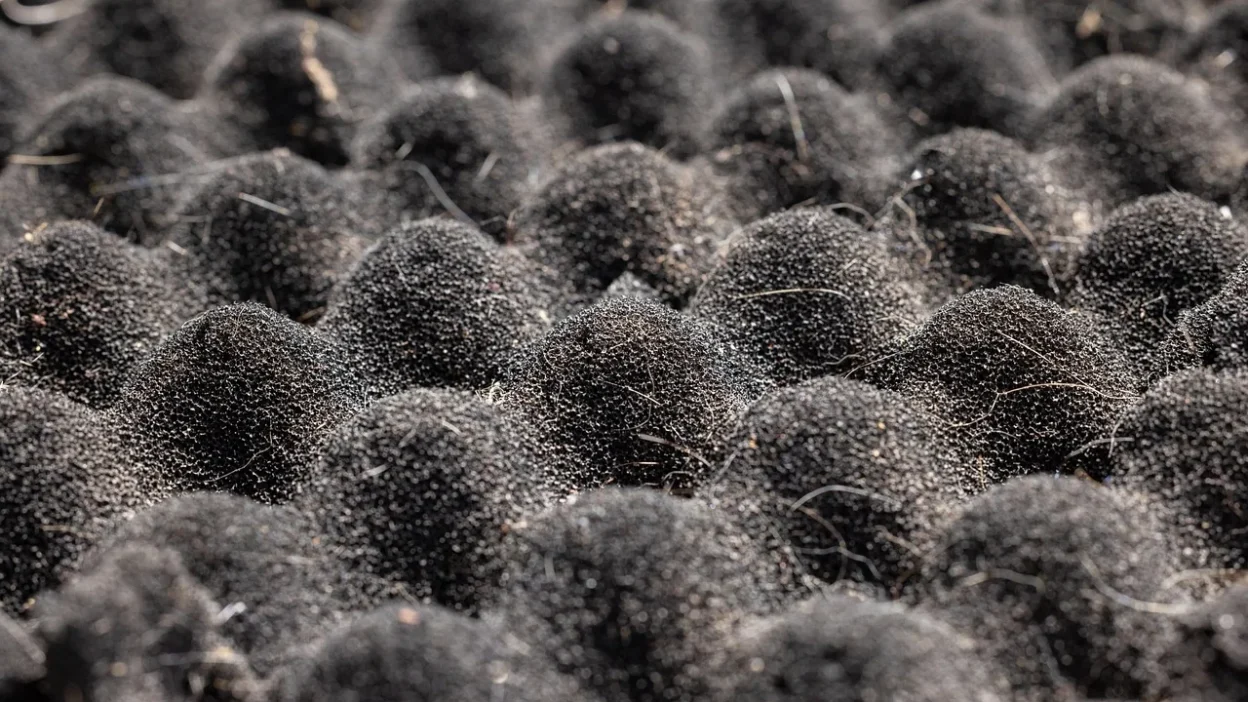
This is the most critical habit change. After cleaning, wring out every last drop of water you can. Then, store the sponge in a location where air can circulate around it. The best practice is to stand it upright in a dish rack or a dedicated sponge holder with drainage holes. A dry sponge is an inhospitable sponge for bacteria.
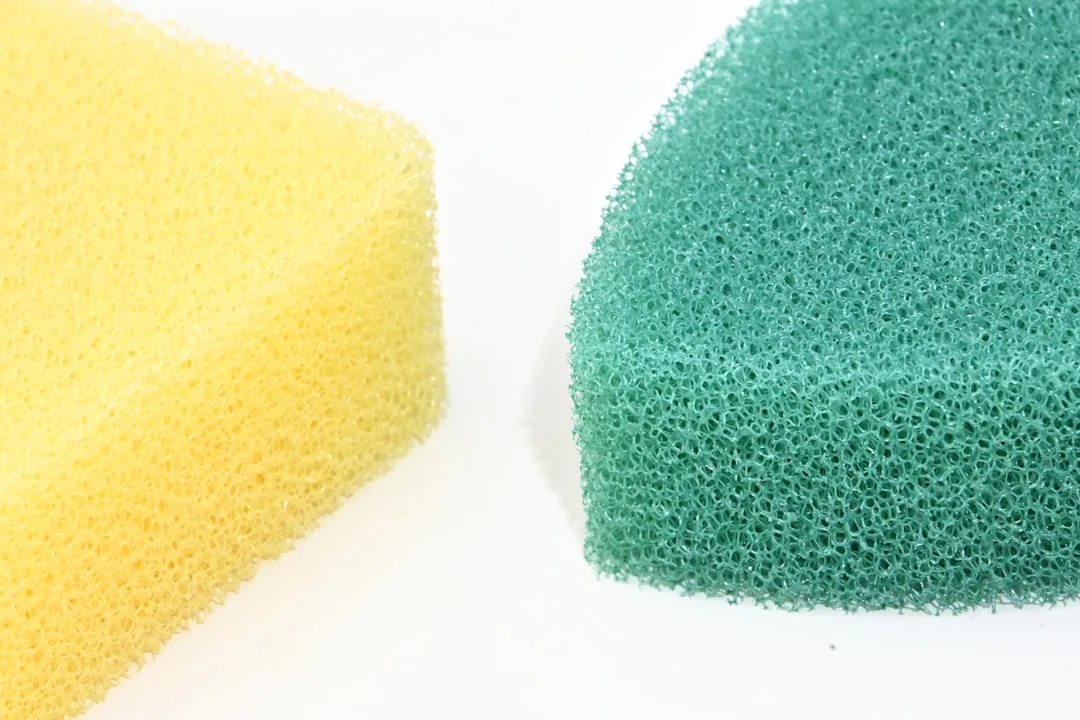
Photo by matsushita kouki on Unsplash
Replace It Regularly
No sponge lasts forever. Even with perfect care, the material will eventually degrade. Establish a replacement schedule, such as every two weeks, or use clear signs as your guide. Replace your sponge if it: fails the “sniff test” (smells bad even when clean and dry), is falling apart, or permanently smears grease instead of cleaning it. Food safety experts often recommend frequent replacement as a key step in preventing cross-contamination.
Keeping Your Sponge Fresh and Functional
Dealing with a smelly, smearing sponge is a common kitchen frustration, but it’s one you can easily solve. The key is understanding that the sponge itself needs care to do its job well. By shifting your focus from just cleaning dishes to also cleaning and maintaining your tool, you break the cycle of odor and grime.
Remember the simple mantra: clean it, dry it, replace it. Make a hot water rinse and proper drying part of your daily routine, use a weekly sanitizing soak, and don’t be sentimental about retiring an old sponge. These small, consistent habits are far more effective than any frantic deep-clean of a sponge that’s past its prime. A fresh sponge makes cleaning quicker, more effective, and more pleasant—giving you one less thing to worry about in your kitchen.