Picture this: you’re enjoying a quiet evening when a full glass of red wine takes a tumble onto your cream-colored carpet. Or, you discover a fresh pet accident in the hallway. That familiar jolt of panic hits—the frantic search for paper towels, the fear of a permanent stain setting in. It’s a universal household moment, but it doesn’t have to end in disaster. The difference between a fleeting spill and a lasting stain often comes down to your first 60 seconds of response. Having a simple, pre-planned carpet spot cleaning checklist is your secret weapon. This guide cuts through the panic and delivers that core, actionable list first, giving you a clear, step-by-step protocol to tackle common spills effectively and protect your carpets from lasting damage.
The best way to handle a carpet spill is to have a mental checklist: act immediately, blot—never rub—to lift the liquid, identify the stain type, apply a targeted cleaning solution, and let the area dry completely. This method prevents stains from setting by addressing them quickly and correctly, turning a potential disaster into a manageable cleanup task. Following a consistent stain response checklist is the key to preserving your carpets.
Your Immediate-Response Carpet Cleaning Checklist
This is your universal, go-to action plan for any fresh spill. Follow these steps in order to contain the damage and prevent a permanent stain from setting.
- Contain & Assess. Quickly remove any solid debris (like food) with a spoon or dull knife. Then, take a breath and identify the spill type—is it a colored liquid, grease, or something else? This quick assessment guides your next move.
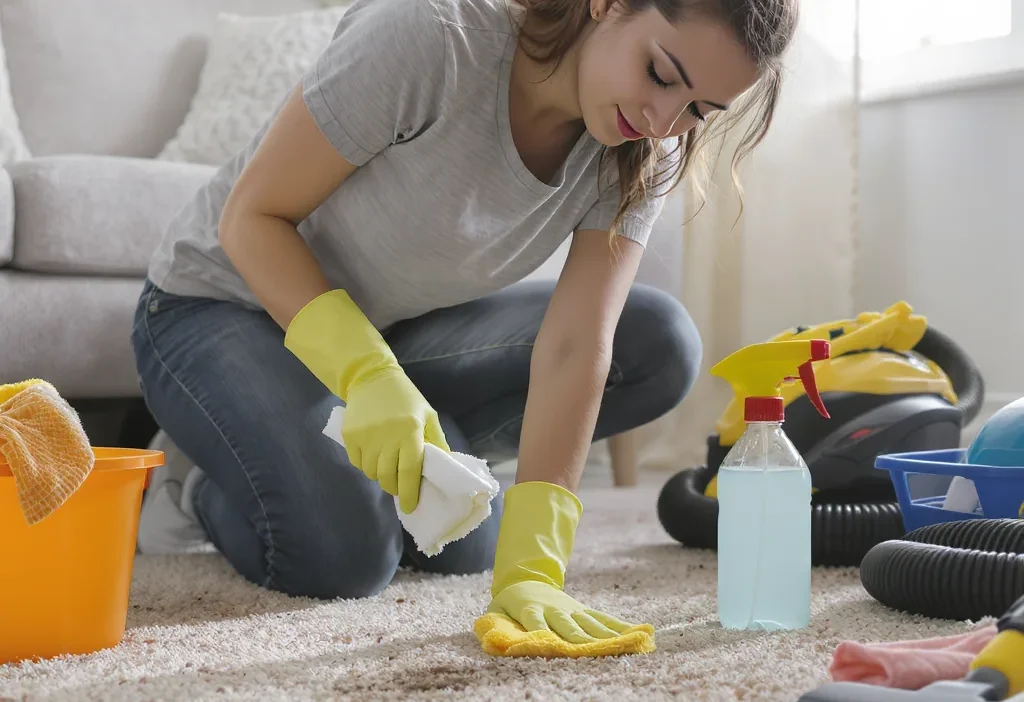
- Blot, Don’t Rub. Grab a clean, white, absorbent cloth or paper towel. Place it over the spill and press down firmly to soak up as much liquid as possible. Rubbing is your enemy—it grinds the stain deeper into the carpet fibers.
- Identify the Stain. Knowing what you’re dealing with (e.g., red wine, coffee, pet urine, cooking oil) is crucial for choosing the right cleaning solution in the next step.
- Mix & Apply a Targeted Solution. Based on the stain type, prepare a simple cleaning solution (common options are below). Apply a small amount to a clean cloth, then gently dab it onto the stain, working from the outside in.
- Blot & Rinse. After applying the solution, use a fresh, damp section of your cloth to blot the area and rinse out any cleaning residue. Repeat the blotting process with a dry cloth to remove moisture.
- Dry Completely. Place a stack of dry paper towels or a clean, white towel over the damp spot. Weigh it down with a heavy book. Leave it for several hours or overnight to absorb residual moisture and prevent wicking. Ensure good air circulation.
Photo by Masjid MABA on Unsplash
This straightforward stain response checklist turns panic into a manageable process. Having this mental protocol is the core of any effective carpet spill cleanup routine.
Stain-Specific Solutions: A Quick Guide to Common Spills
Now, let’s expand on step 3 and 4 from your core checklist. Here’s a quick-reference guide for handling typical household accidents. Always test any solution on an inconspicuous area of your carpet first.
Red Wine or Fruit Juice
For a fresh red wine spill, blot up as much as possible. Then, mix one tablespoon of clear dish soap with two tablespoons of white vinegar in two cups of warm water. Apply with a cloth, blot, and rinse. For older stains, you may need a specialized enzymatic cleaner.
Coffee or Tea
Blot the spill. Mix one teaspoon of clear, mild dish soap (like Dawn) with a cup of lukewarm water. Apply, blot, and rinse. If a tan discoloration remains, a solution of one part white vinegar to two parts water can help lift it.
Pet Accidents
Blot up the urine thoroughly. Then, apply a solution of equal parts white vinegar and cold water to neutralize odors and break down the stain. Blot dry. For a complete carpet spill cleanup routine for pet stains, an enzymatic cleaner designed for pet messes is often the most effective long-term solution.
Grease or Cooking Oil
Sprinkle baking soda or cornstarch over the spot to absorb the grease. Let it sit for 15 minutes, then vacuum. For any remaining residue, dab with a cloth dampened with a drop of dish soap in warm water, then rinse and blot dry.
Mud or Dirt
Let the mud dry completely. Once dry, vacuum thoroughly to lift the particles. For any remaining stain, use the mild dish soap solution mentioned above. This DIY carpet spot cleaning method prevents you from smearing wet mud deeper into the carpet.
What NOT to Do: Common Carpet Cleaning Mistakes
Even with the best intentions, certain actions can make a stain worse or damage your carpet fibers. Avoid these common pitfalls to keep your emergency carpet stain removal steps effective.
Don’t Rub the Stain. This is the most critical error. Rubbing spreads the spill and forces it deeper into the carpet backing, making it nearly impossible to remove.
Don’t Over-Wet the Carpet. Using excessive water or cleaner can lead to mold, mildew, and carpet backing damage. It also causes “wicking,” where the stain reappears at the surface as the padding dries.
Don’t Use Colored or Harsh Cleaners Blindly. Avoid using bleach on colored carpets, and never use laundry detergent (it often contains brighteners and dyes). Always test any cleaner in a hidden spot first.
Don’t Apply Heat. Avoid using a hairdryer, steam cleaner, or iron on a fresh stain. Heat can permanently set proteins (like in blood or dairy) and dyes, locking the stain in place.
Don’t Skip the Drying Step. Leaving the area damp is an invitation for mold and wicking. Proper drying is the final, non-negotiable part of your stain response checklist.
Building Your Spot-Cleaning Kit & Long-Term Care
Preparation is half the battle. Assemble a simple kit with these items, and store it in a convenient closet. This turns your mental checklist into immediate action.
Your Essential DIY Cleaning Kit
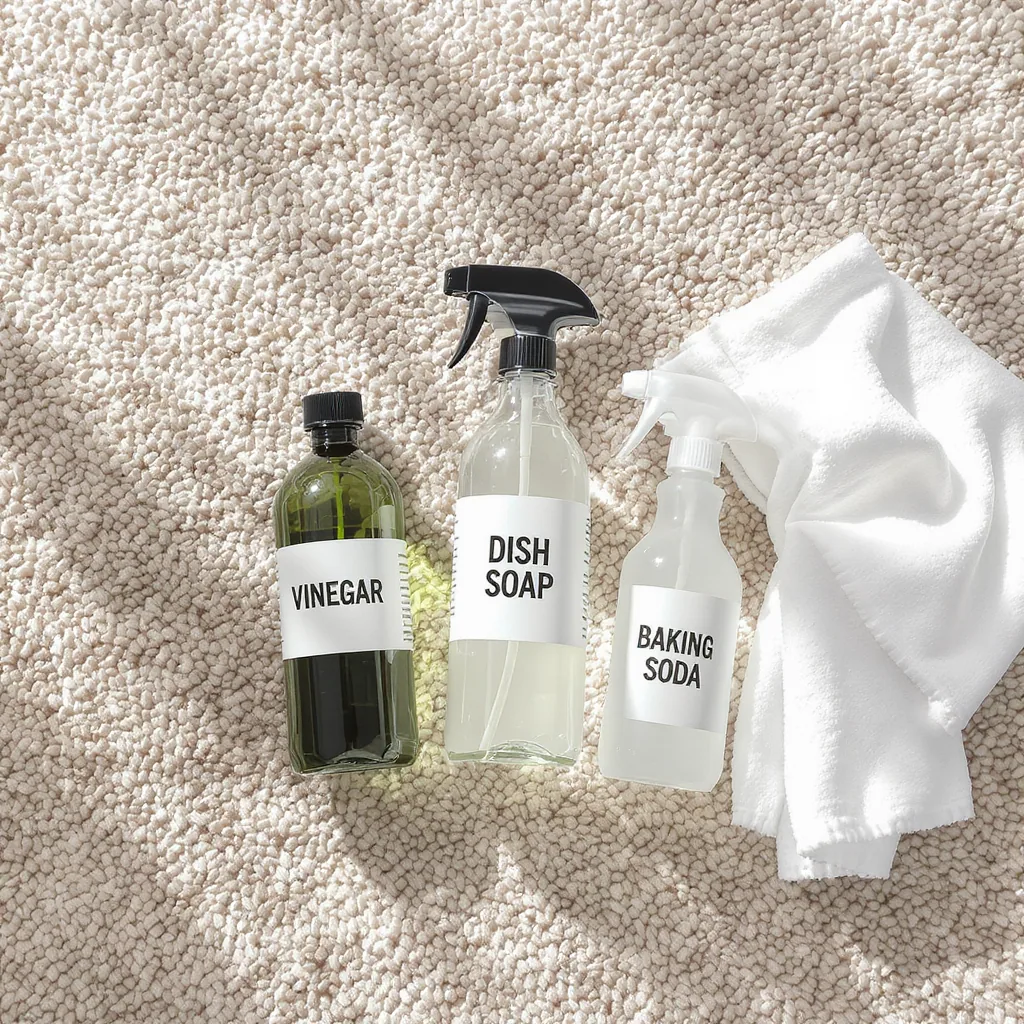
- White Microfiber Cloths or Paper Towels: White ensures no dye transfer.
- Spray Bottle: For applying water or your vinegar solution.
- Clear, Mild Dish Soap: (e.g., Dawn Original). A powerful degreaser.
- White Vinegar: A natural deodorizer and mild acid for breaking down many stains.
- Baking Soda: For absorbing odors and grease.
- Dull Knife or Spoon: For scraping up solids.
Post-Cleanup Tip & Knowing When to Call a Pro
After any cleanup, gently fluff the carpet fibers with your fingers once the area is completely dry to restore the pile. For large, old, or unknown stains, or if you’ve followed your carpet spot cleaning guide without success, it’s time to call a professional carpet cleaner. They have industrial-grade equipment and solutions to tackle set-in stains without damaging your carpet.
You’re Now Prepared for Any Spill
A spill doesn’t have to mean a permanent stain. By internalizing the simple checklist and avoiding common mistakes, you’ve equipped yourself with a reliable carpet spill cleanup routine. Keep your basic kit handy, and you can face the next glass of tipped red wine or muddy paw prints not with dread, but with calm, effective action. Your carpets will thank you.