You might think the biggest cleaning mistake is grabbing the wrong bottle for the job. But the truth is more counterintuitive: the most common and costly errors happen when you use the *right* product in the *wrong* way. At the heart of this problem is a simple, often-overlooked step—dilution. Far from just watering down your cleaner, proper dilution is the secret key that unlocks a product’s true power, turning a potential hazard or a wasteful dud into an effective, safe, and economical solution. Ignoring the instructions on the label isn’t just a minor oversight; it’s a direct path to damaged surfaces, lingering grime, wasted money, and even unnecessary chemical exposure. This guide cuts through the confusion, explaining the straightforward science behind why concentration matters and how mastering a few basic principles can transform your entire cleaning routine from a frustrating chore into a predictable success.
The most frequent cleaning product errors involve improper dilution—using concentrates straight or guessing ratios. This wastes money, risks damaging surfaces, and can leave behind harmful residues. Correct dilution, based on the task and surface, is essential for safe, effective cleaning. The core fix is understanding that ‘more’ isn’t ‘better’ and learning to measure diligently instead of eyeballing.
The Science of Cleaning: Why Dilution Isn’t Just Watering Down
At its core, cleaning is a chemical process, not just an act of physical scrubbing. Most effective cleaners contain surfactants—molecules that reduce the surface tension of water, allowing it to penetrate grime, surround it, and lift it away. The key to their performance is achieving the right concentration in your solution.
Think of it like this: too few surfactant molecules (an overly diluted solution) and they can’t form the structures needed to trap dirt effectively. This is why a weak solution leaves streaks or a greasy film—it’s simply not powerful enough for the job. On the other hand, a solution that’s too concentrated is packed with more active molecules than necessary. Beyond a certain point, adding more doesn’t clean better; it just leaves behind a sticky, difficult-to-rinse residue that can attract more dirt and potentially damage sensitive surfaces. This wasteful and risky overuse is a fundamental form of cleaning chemical misuse.
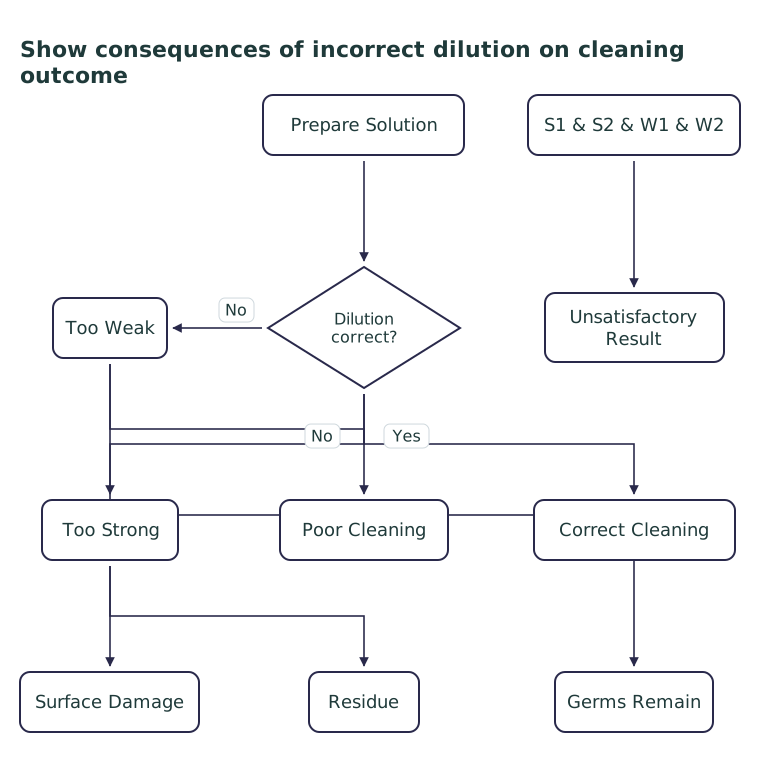
For disinfectants, the cleaning solution concentration is even more critical. These products are tested and registered with government agencies (like the EPA in the U.S.) to kill specific pathogens at a specific dilution and with a specific “dwell time.” Using them at a weaker ratio may render them completely ineffective against germs, while using them stronger won’t necessarily kill better and increases chemical exposure. Understanding this science transforms dilution from a vague suggestion into the non-negotiable foundation of using cleaning products correctly.
The Top 5 Cleaning Product Mistakes (And Why You Make Them)
Most common cleaning errors aren’t about laziness, but about misconceptions and habits. Let’s break down the big five, why they happen, and what they cost you.
1. Eyeballing Measurements (“A Glug is Close Enough”)
The Mistake: Pouring concentrate directly into a spray bottle or bucket without using any measuring tool.
The Why: It feels faster and more intuitive. We assume we can estimate accurately.
The Consequence: Inconsistent results. One day your floors are sticky, the next they’re dull. This guessing game is the primary driver of cleaner dilution mistakes, leading to wasted product and frustration.
2. Using Concentrates Straight (“Stronger Must Be Better”)
The Mistake: Applying a concentrated cleaner directly to a surface, especially for tough stains.
The Why: The “more is better” fallacy. If a little works, a lot must work miracles.
The Consequence: This is a direct path to damage. It can strip finishes, degrade seals, discolor fabrics, and leave heavy residues that are difficult to remove. It’s also a significant safety risk, increasing fumes and skin exposure.
3. The Dangerous Cocktail (Mixing Chemicals)
The Mistake: Combining different cleaners, like bleach and ammonia, to create a “super cleaner.”
The Why: A misguided attempt to boost power or tackle multiple types of grime at once.
The Consequence: This can produce toxic gases (like chloramine from bleach and ammonia) or create hazardous, unstable compounds. Important note: This information is for educational purposes to highlight a severe risk; it is not a guide for experimentation. Never mix cleaning chemicals unless the label explicitly states it is safe to do so.
4. Ignoring Dwell Time (The Spray-and-Wipe)
The Mistake: Spraying a disinfectant or degreaser and immediately wiping it off.
The Why: Impatience and a misunderstanding of how these products work. We confuse physical removal with chemical action.
The Consequence: The product doesn’t have time to work. Germs aren’t killed, and grease isn’t broken down. You’ve essentially just moved dirt around with a wet, chemical-laden cloth.
5. Neglecting to Rinse or Change Water
The Mistake: Using the same mop water or rinse bucket for an entire house, or not rinsing surfaces after cleaning.
The Why: To save time and effort.
The Consequence: You’re essentially redepositing dirt and soap scum. This leads to dingy floors, filmy windows, and that “never quite clean” feeling. For disinfectants, failing to rinse where required (check the label) can leave unsafe residues.
Dilution Decoded: A Practical Guide to Getting It Right
Fixing incorrect dilution is straightforward once you have the right tools and know how to read the instructions. Here’s your practical manual.
Gear Up: The Essential Tools
Stop guessing. Equip yourself with:
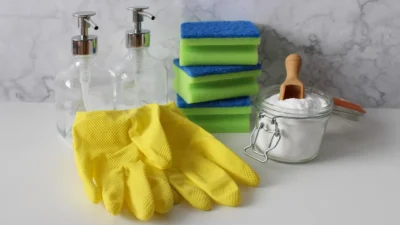
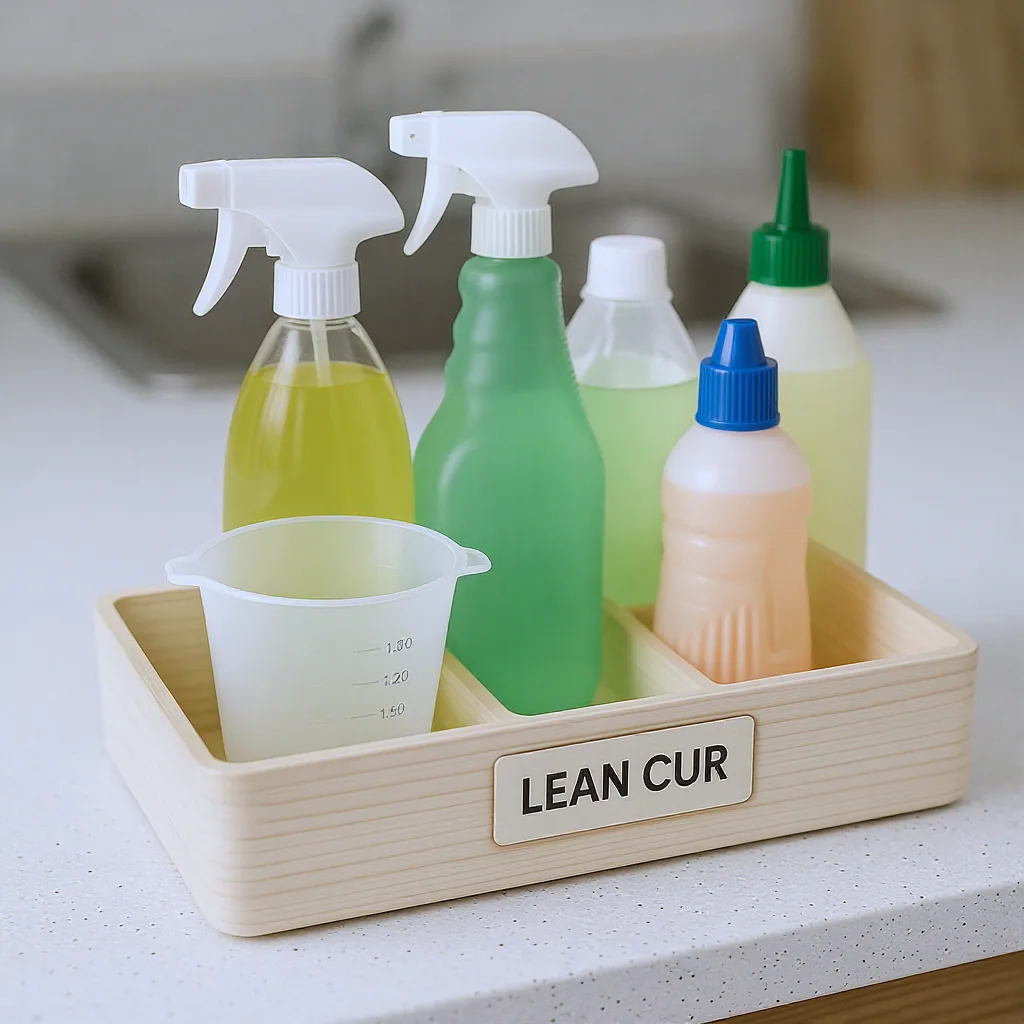
- A dedicated measuring cup with fluid ounce and milliliter markings. A kitchen measuring cup works perfectly.
- Clean, labeled spray bottles for your most-used solutions. Use a permanent marker to note the product and ratio (e.g., “All-Purpose Cleaner – 1:32”).
- A bucket with volume markings for floor cleaning.
Cracking the Code: How to Read a Label
Labels can be confusing. Look for a “Dilution” or “Directions for Use” section. Ratios are typically given as one part concentrate to X parts water (e.g., 1:10, 1:32, 1:64). The first number is always the concentrate. “1:32” means 1 ounce of concentrate to 32 ounces of water.
The Simple Math (It’s Easier Than You Think)
Let’s say your bottle says “Dilute 1:10 for general cleaning” and your spray bottle holds 16 oz.
- The ratio (1:10) means the total solution has 11 parts (1 part cleaner + 10 parts water).
- Divide your bottle size by the total parts: 16 oz / 11 = ~1.45 oz.
- That’s your concentrate amount: about 1.5 oz.
- Fill the rest with water: 16 oz – 1.5 oz = 14.5 oz of water.
A quicker, close-enough method for spray bottles: For a 1:32 ratio in a 32oz bottle, use 1 oz of concentrate. For a 1:10 ratio in a 20oz bottle, use about 2 oz of concentrate. The goal is consistent, measured proper dilution ratios, not perfection.
Task-Based Examples
- Disinfecting High-Touch Surfaces: Use the exact ratio and dwell time on the disinfectant label. This is non-negotiable for germ kill.
- All-Purpose Cleaning (Counters, Appliances): A 1:32 to 1:64 ratio of a concentrated all-purpose cleaner is usually sufficient.
- Glass & Mirrors: A very weak solution (1:64 or weaker) prevents streaking. Often, just a drop of concentrate in a bottle of water is enough.
- Floor Mopping: Follow the bucket instructions, usually between 1/4 cup to 1/2 cup of concentrate per 3 gallons of water.
Troubleshooting Your Cleaning Routine
If your cleaning results are lackluster, the problem likely traces back to dilution or application. Use this diagnostic guide.
Problem: Streaky Windows and Mirrors
Likely Cause: Too much cleaning concentrate in your solution. The surfactants can’t fully rinse off, leaving a residue that smears.
The Fix: Dilute your glass cleaner significantly more. Try a 1:64 ratio or just a capful in a full spray bottle. Use a microfiber cloth for drying.
Problem: Sticky or Dull Floors After Mopping
Likely Cause: Overusing cleaning products. Too much cleaner leaves a soap film that attracts dirt. Alternatively, not changing mop water often enough.
The Fix: Measure your floor cleaner precisely. After cleaning, do a final rinse with clean water (if the floor type allows) to remove any residue. Change your mop water after every 2-3 rooms.
Problem: Lingering Odors or “Chemical Smell”
Likely Cause: Using a solution that’s too strong, or not rinsing adequately where required. The smell is the excess product left behind.
The Fix: Ensure proper dilution. Increase ventilation during and after cleaning. For surfaces that come into contact with food or skin, a thorough rinse with water is often necessary.
Problem: Cleaning Doesn’t Seem to Disinfect
Likely Cause: Not allowing the disinfectant to remain wet on the surface for the required “dwell time” listed on the label. This time is critical for the chemical reaction that kills germs.
The Fix: Read the label! Spray or apply enough solution to keep the surface visibly wet for the entire contact time (often 3-10 minutes) before wiping.
Beyond the Bottle: Safe Storage and Disposal
Mastering cleaning product safety extends to what happens before and after you clean. Always store concentrated cleaners in their original containers, tightly sealed, and away from heat, sunlight, and out of reach of children and pets. For homemade diluted solutions, use a container that’s clearly and permanently labeled with the contents and date; discard unused portions after a few weeks, as their efficacy can degrade.
Disposal matters, too. Never pour large quantities of cleaning chemicals down the drain or into the environment. For small, household amounts, diluting with plenty of water before draining is typically acceptable, but always check your local municipal guidelines for hazardous waste disposal. For concentrated or specialty products, your community may have a hazardous waste collection program—utilize it. This final step closes the loop on responsible cleaning, protecting both your home and the broader environment.
Your Home, Health, and Wallet Will Thank You
Shifting your mindset from “more product equals more clean” to “the right concentration equals the right clean” is a small change with profound impacts. By avoiding common cleaning product mistakes, you’re not just achieving better results—you’re safeguarding your surfaces from damage, reducing your family’s exposure to harsh chemicals, and making that bottle of concentrate last months longer. That’s a win for your home, your health, and your budget.
This preventive approach turns cleaning from a repetitive chore into an efficient, effective system. The power was always in the bottle; you just needed the knowledge to unlock it correctly. Start today: pick one cleaner you use regularly, check its label, and commit to measuring its dilution precisely next time. You might be surprised by the difference such a simple, intentional act can make.
Mastering cleaning isn’t about buying more products; it’s about using the ones you have correctly. The core mistakes—guessing measurements, using concentrates straight, mixing chemicals, ignoring dwell time, and failing to rinse—all stem from misunderstanding how cleaning chemistry works. The fix is methodical: understand why concentration matters (too weak is ineffective, too strong is wasteful and risky), equip yourself with simple measuring tools, decode product labels to find the right ratio for the task, and troubleshoot problems by first examining your dilution and technique. Embracing these proper dilution ratios is the key to effective, safe, and economical cleaning.